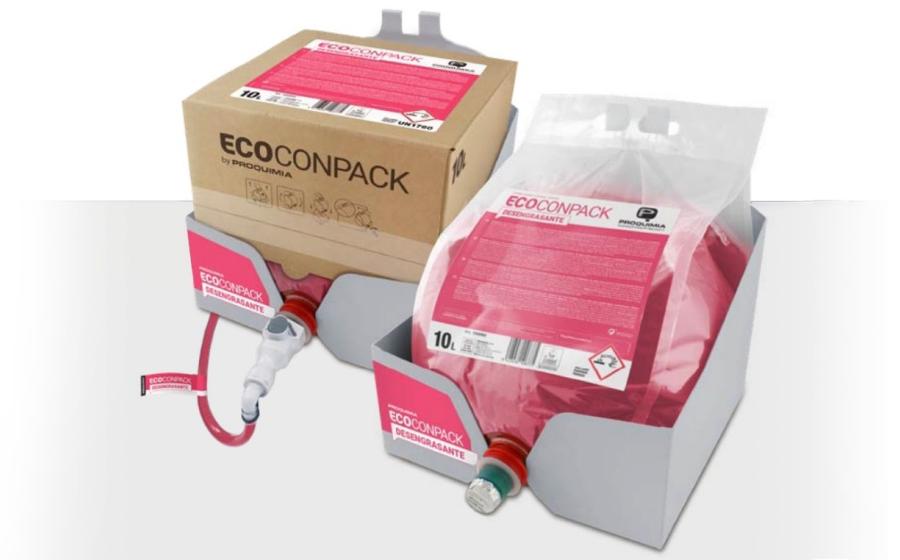

The foodservice industry is undergoing change. New regulations and increasing sustainability requirements are driving solutions that make it possible to reduce waste and increase reuse. At the same time, single-use products continue to play an important role – in many situations they remain the most hygienic, practical, or cost-effective option. It is therefore not about replacing one with the other but about creating a balance where different solutions are used where they make the most sense.

The RVO project “AI-Strap: Accelerating Circular Plastics with Solvent-Based Recycling Intelligence” aims to tackle complex waste streams such as multilayer plastic packaging. This type of packaging cannot be recycled with current technologies.

“Multilayer plastics present a major challenge for recycling,” says project lead Željko Tomović of the TU/e Polymer Performance Materials group.

For example, the thin plastic protecting produce from rotting is “extremely” hard to recycle, as it consists of multiple layers of different polymers.

The facility is designed to recycle over 1 billion post-consumer PET bottles annually, converting them back into high-quality, food-grade recycled PET (rPET) suitable for direct food and beverage packaging applications. With this commissioning, Chemco significantly strengthens India's domestic capability to replace virgin plastic with certified recycled material while maintaining stringent quality and safety standards.

Performa Lumi is a CTMP board coated on both sides with a light-coated reverse, delivering high whiteness, excellent printability, and a smooth surface that supports strong brand expression. It is an ideal choice for applications where shelf appeal and consistent performance are equally important.

Like Performa Nova, Performa Lumi is produced using FiberLight TecTM, Stora Enso’s proven proprietary technology that enables the creation of strong yet lightweight board structures. This allows brand owners to achieve the desired functionality while optimising material efficiency.

Delivering meaningful advances in sustainability and efficiency, SuperPod enables blister cavities to become dramatically smaller - by up to 39% in some cases while maintaining full barrier performance and seamless machine runnability. This cold-form innovation results in a significantly reduced packaging footprint, lower material and resource usage per dosage across the lifecycle, and consequently, reduced costs and carbon emissions.

At a Glance

  • Automated systems successfully sort 45% of rigid hospital plastics into recyclable material streams.
  • Contamination risks from blood and drug residues complicate healthcare plastic recycling efforts.
  • Multi-material films compromise recycling stream purity and reduce commercial value significantly.

The Healthcare Plastics Recycling Council (HPRC) – Europe has released a new case study titled Unlocking Recycling Potential: Automated Sorting Trials of Medical Plastic Waste, research building upon t

With the German Printing Ink Ordinance (GIO) set to apply from January 2027, manufacturers of printing inks for food packaging are facing strict regulatory requirements aimed at ensuring consumer safety. Compliance with these regulations demands extensive development work, reformulation, and thorough testing across product portfolios.

Tefen, Israel- StePacPCC, a world leader in innovative Modified Atmosphere Packaging solutions (MAP) for fresh produce, has developed a new packaging solution for preserving the freshness and vibrant appearance of the tropical fruit pitaya (dragon fruit) during the typically lengthy journey from Ecuador to the US and Europe.