



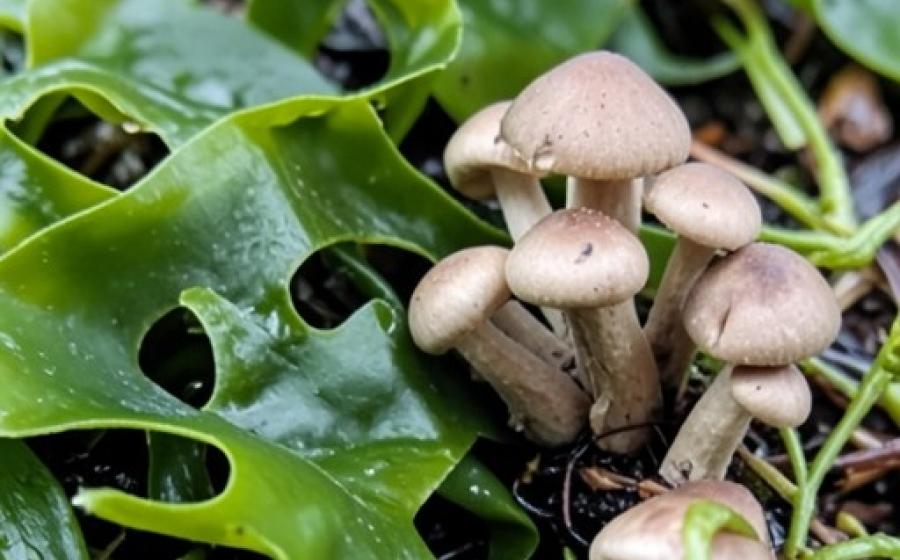

Plastic packaging is one of the biggest environmental challenges of our time, and two surprising heroes are stepping up to replace it: seaweed and mycelium. Both are natural, biodegradable, and rapidly renewable. But how do they compare? Let's break it down.
What Are Seaweed Packaging Films?
Seaweed-based packaging films are made from algae, typically red or brown varieties, processed into a flexible, transparent material. Brands like Notpla have pioneered seaweed films for food wrappers, sachets, and even edible coatings.
Key advantages of seaweed packaging:
- Biodegrades in weeks, not centuries, even in the ocean
- Requires no freshwater or fertilizer to grow
- Can be edible and food-safe, opening doors for single-use food applications
- Seaweed absorbs CO₂ as it grows, making it a carbon-friendly crop
Limitations: Seaweed films can be sensitive to humidity and may not offer the same structural strength as conventional plastic. They're best suited for thin films, wrappers, and sachets rather than rigid containers.
What Is Mycelium Packaging?
Mycelium is the root-like network of fungi. Companies like Ecovative Design bind mycelium with agricultural waste (like corn stalks or hemp) to grow custom-shaped packaging in just days.
Key advantages of mycelium packaging:
- Fully compostable at home within 30–90 days
- Naturally mold and fire-resistant
- Can be grown into precise shapes, making it perfect for protective packaging like electronics or furniture inserts
- Uses waste agricultural byproducts as its main feedstock
Limitations: Mycelium packaging requires a controlled growth environment, which adds to production complexity. It also performs better as a rigid foam alternative than as a thin, flexible film, though mycelium-based films are an emerging area of research.
Seaweed vs. Mycelium: A Head-to-Head Comparison
Feature Seaweed Film Mycelium Packaging
Best format Thin films, wrappers Rigid, moldable shapes
Biodegradation Weeks (even in ocean) 30–90 days (compost)
Edible? Often yes No
Scalability High Growing rapidly
Moisture resistance Lower Higher
Cost Moderate Moderate–High
Which One Should You Choose?
The answer depends on your application. Seaweed films shine in food packaging, sachets, and single-use wraps where a lightweight, edible, or ocean-safe material is essential. Mycelium packaging excels as a replacement for styrofoam and molded pulp, offering superior cushioning and shape flexibility.
The good news? These materials aren't really competing, they're complementary. A sustainable packaging future may well use both, each playing to its strengths.
The Bottom Line
Both seaweed and mycelium packaging films represent a genuine leap forward in sustainable materials science. As production scales and costs come down, expect to see both showing up in everything from your takeout box to your next online delivery. The plastic-free future is growing, quite literally.