




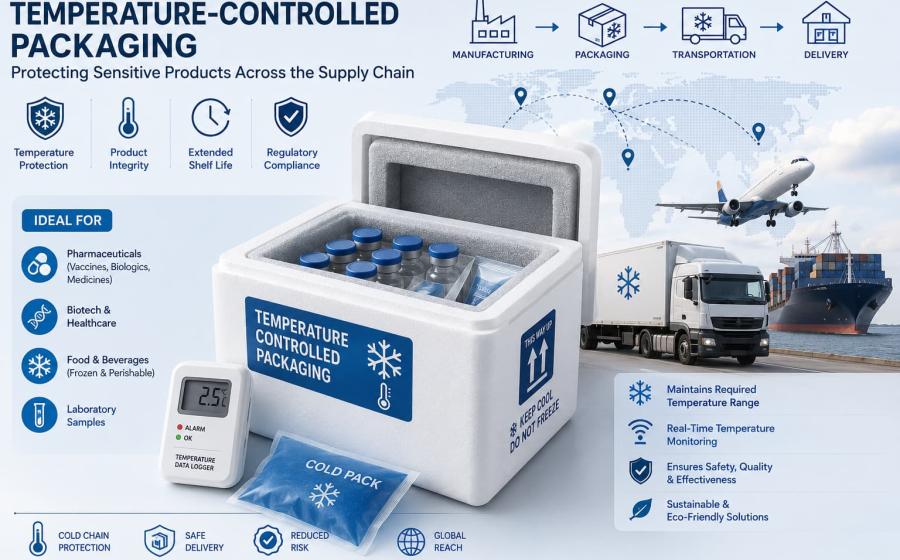

Temperature-controlled packaging plays a vital role in protecting products that are sensitive to heat, cold, and temperature fluctuations. It is widely used in pharmaceutical, food, biotechnology, and healthcare industries where maintaining product stability and safety is critical.
As global supply chains expand and demand for sensitive products increases, temperature-controlled packaging has become one of the fastest-growing areas in the packaging industry.
What is Temperature-Controlled Packaging?
Temperature-controlled packaging is specially designed packaging that helps maintain a specific temperature range during storage and transportation.
Its main purpose is to protect products from:
- Excessive heat
- Freezing temperatures
- Humidity changes
- Temperature fluctuations during transit
This packaging ensures that products remain safe, stable, and effective until they reach the end user.
Why is Temperature-Controlled Packaging Important?
Many products can lose quality or become unsafe when exposed to incorrect temperatures.
For example:
- Vaccines may lose effectiveness
- Medicines can degrade
- Frozen foods can spoil
- Biotech products can become unstable
Temperature-controlled packaging helps maintain product integrity throughout the supply chain.
Industries That Use Temperature-Controlled Packaging
Pharmaceutical Industry
One of the largest users of temperature-controlled packaging.
Used for:
- Vaccines
- Biologics
- Injectable medicines
- Clinical trial products
- Insulin and specialty drugs
Pharmaceutical products often require strict temperature monitoring to comply with global regulations.
Food and Beverage Industry
Used for:
- Frozen foods
- Dairy products
- Meat and seafood
- Ready-to-eat meals
- Beverages
Proper temperature control helps maintain freshness and prevent spoilage.
Biotechnology and Healthcare
Temperature-sensitive laboratory samples and medical products require reliable cold-chain packaging solutions.
Types of Temperature-Controlled Packaging
1. Insulated Packaging
Insulated packaging uses special materials to reduce heat transfer and maintain internal temperature.
Common materials include:
- Foam containers
- Thermal liners
- Insulated boxes
2. Gel Packs and Ice Packs
Used to keep products cool during transportation.
Commonly used in:
- Pharmaceutical shipments
- Food delivery
- Cold-chain logistics
3. Phase Change Materials (PCMs)
PCMs help maintain a stable temperature for longer durations by absorbing and releasing heat.
These are commonly used for high-value pharmaceutical products.
4. Active Temperature-Controlled Packaging
This advanced system uses powered cooling or heating systems to maintain temperature throughout transportation.
Typically used for:
- International pharmaceutical shipments
- Biotech products
- Long-distance cold-chain logistics
Challenges in Temperature-Controlled Packaging
Despite its importance, temperature-controlled packaging faces several challenges:
- High transportation costs
- Strict regulatory requirements
- Complex global logistics
- Sustainability concerns
- Risk of temperature excursions
Companies must carefully balance product protection, cost efficiency, and environmental impact.
Smart Technologies in Temperature-Controlled Packaging
Modern packaging solutions now include smart monitoring technologies such as:
- Temperature sensors
- Data loggers
- GPS tracking
- Real-time monitoring systems
- IoT-enabled packaging
These technologies improve visibility and reduce product loss during transit.
Sustainability in Cold-Chain Packaging
The packaging industry is increasingly focusing on eco-friendly temperature-controlled solutions.
Current innovations include:
- Recyclable insulated materials
- Reusable cold-chain containers
- Lightweight packaging
- Sustainable thermal liners
- Reduced plastic usage
Sustainability is becoming a key factor in temperature-controlled packaging development.
Future Trends in Temperature-Controlled Packaging
The future of this sector will focus on:
- Smart connected packaging
- AI-based supply chain monitoring
- Sustainable insulation materials
- Improved cold-chain efficiency
- Advanced reusable systems
As healthcare and e-commerce industries continue to grow, demand for reliable temperature-controlled packaging solutions will increase rapidly.
Temperature-controlled packaging is essential for protecting sensitive products across pharmaceutical, food, and healthcare industries.
By maintaining the right temperature throughout the supply chain, these packaging solutions help ensure product safety, quality, and effectiveness.
With advancements in smart technology and sustainable materials, temperature-controlled packaging is becoming more efficient, reliable, and environmentally responsible for the future.