




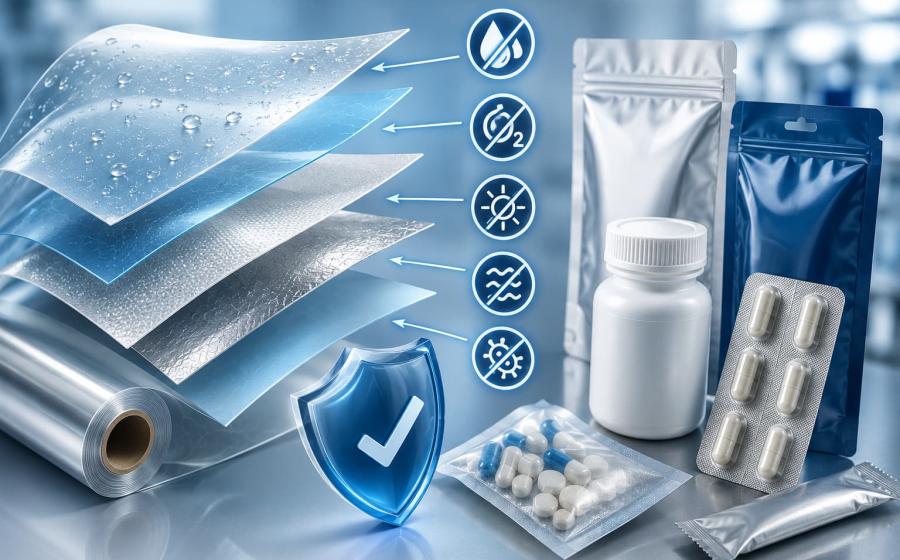

Barrier films play a critical role in modern packaging by protecting products from external factors such as moisture, oxygen, light, aroma loss, and contamination. They are widely used in food, pharmaceutical, medical, and industrial packaging to improve product safety, shelf life, and performance.
As industries move toward sustainable and high-performance packaging solutions, barrier films have become one of the most important technologies in the packaging sector.
What Are Barrier Films?
Barrier films are specialized packaging materials designed to prevent or reduce the transmission of gases, moisture, light, and odors through the packaging structure.
These films are usually made using:
- Multi-layer laminates
- Coated films
- Metallized films
- High-performance polymers
Barrier films help maintain product quality and extend shelf life by creating a protective barrier between the product and the external environment.
Why Are Barrier Films Important?
Many products are highly sensitive to environmental conditions. Exposure to oxygen, humidity, or UV light can reduce product quality, effectiveness, and shelf life.
Barrier films help:
- Preserve freshness
- Prevent contamination
- Protect sensitive ingredients
- Reduce food waste
- Maintain pharmaceutical stability
- Improve product safety
Types of Barrier Protection
1. Oxygen Barrier
Oxygen can cause oxidation, spoilage, color change, and loss of product quality.
Oxygen barrier films are commonly used for:
- Snacks
- Coffee
- Dairy products
- Pharmaceuticals
- Nutraceuticals
Common oxygen barrier materials:
- EVOH (Ethylene Vinyl Alcohol)
- Aluminum foil
- Metallized PET
2. Moisture Barrier
Moisture can damage products by causing clumping, microbial growth, or loss of effectiveness.
Moisture barrier films are important for:
- Powders
- Tablets
- Dry foods
- Effervescent products
Common moisture barrier materials:
- Polyethylene (PE)
- Polypropylene (PP)
- Aluminum foil
3. Light Barrier
Some products are sensitive to UV and visible light exposure, which can degrade ingredients and reduce shelf life.
Light barrier packaging is used for:
- Medicines
- Dairy products
- Nutritional supplements
- Beverages
Materials commonly used:
- Metallized films
- Aluminum foil laminates
- Opaque structures
4. Aroma Barrier
Barrier films also help retain product aroma and prevent odor transfer from outside sources.
This is especially important for:
- Coffee
- Spices
- Pet food
- Fragrance products
Common Materials Used in Barrier Films
Material Key Function
PET Strength and printability
PE Moisture barrier and sealing
PP Heat resistance and moisture barrier
EVOH Excellent oxygen barrier
Aluminum Foil High barrier against oxygen, moisture, and light
Nylon Puncture resistance
Metallized Films Enhanced barrier with lightweight structure
Applications of Barrier Films
Food Packaging
Barrier films help extend shelf life and maintain freshness in:
- Snacks
- Frozen foods
- Dairy products
- Ready-to-eat meals
- Coffee packaging
Pharmaceutical Packaging
In pharmaceutical applications, barrier films protect medicines from environmental exposure and maintain product stability.
Used in:
- Blister packaging
- Sachets
- Strip packs
- Medical device packaging
Industrial Packaging
Barrier films are also used in:
- Chemical packaging
- Electronic components
- Agricultural products
Sustainable Barrier Film Innovations
Sustainability is driving major innovation in barrier film technology.
The industry is increasingly focusing on:
- Recyclable mono-material structures
- Reduced plastic usage
- Solvent-free lamination
- Lightweight barrier packaging
- Paper-based barrier solutions
Manufacturers are working to balance high barrier performance with recyclability and environmental compliance.
Challenges in Barrier Film Development
Despite their advantages, barrier films also present challenges:
- Recycling complexity in multi-layer structures
- Higher material costs
- Processing limitations
- Balancing performance with sustainability
Packaging companies continue investing in R&D to develop more recyclable and efficient barrier solutions.
Future of Barrier Films
The future of barrier packaging will focus on:
- High-performance recyclable materials
- Smart barrier packaging
- Bio-based barrier coatings
- Advanced nano-coatings
- Improved mono-material laminates
As demand for sustainable packaging grows, barrier film technology will continue evolving to meet both regulatory and consumer expectations.
Barrier films are essential for protecting products, extending shelf life, and maintaining quality across food, pharmaceutical, and industrial packaging applications.
With increasing focus on sustainability, safety, and performance, barrier film innovation is becoming one of the most important areas in the packaging industry.
Companies that adopt advanced and sustainable barrier technologies will be better positioned to meet future market demands while improving product protection and operational efficiency.