



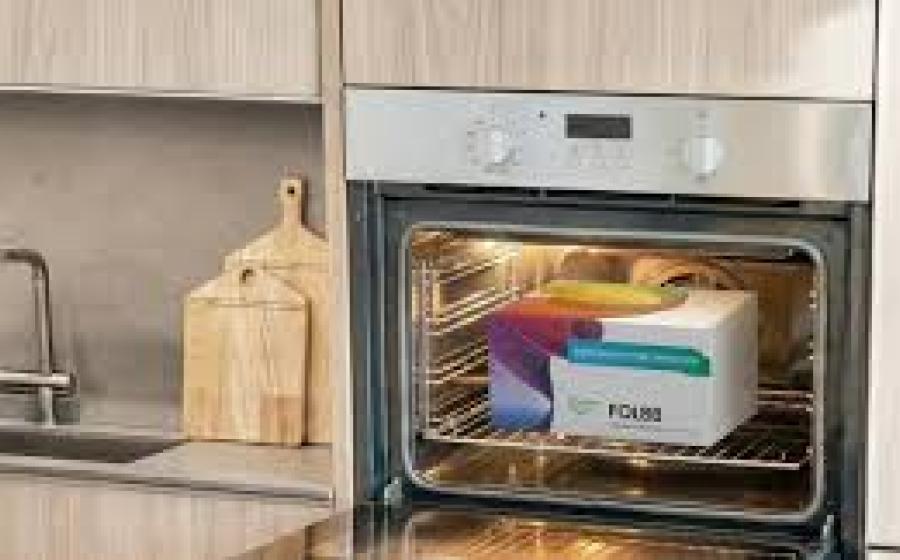

Folbb has introduced a new heat-resistant, grease-barrier cartonboard for frozen and oven-ready foods, designed to replace plastic laminates with recyclable fibre-based packaging.
Folbb has introduced a new high-performance cartonboard application designed specifically for frozen and oven-ready food products, targeting the growing demand for recyclable alternatives to plastic-heavy food packaging. The new material, branded Excellent Top Pure Oven Freeze Grease III, is engineered for products that can move directly from freezer to oven or microwave without compromising structural integrity or food safety.
Produced at Folbb’s Baiersbronn mill, the cartonboard is made from virgin fibre and is designed to deliver a combination of heat resistance, grease protection and moisture stability. The company states that the material contains no optical brightening agents (OBAs) and no intentionally added PFAS, aligning with increasing regulatory and retailer pressure to eliminate persistent chemicals from food-contact packaging.
The development reflects a broader shift in frozen food packaging, where fibre-based materials are increasingly replacing multi-layer plastic structures. Folbb’s solution is intended to eliminate the need for additional polyethylene (PE) or polyethylene terephthalate (PET) barrier layers, simplifying pack construction and improving recyclability.
As food packaging formats become more complex, the industry is under pressure to simplify material structures without compromising performance under extreme conditions such as freezing and high-temperature cooking.
The cartonboard is designed to withstand demanding thermal conditions, including oven use at up to 200°C for 60 minutes or 220°C for 30 minutes, as well as microwave heating at 800 watts for up to five minutes. These performance specifications position it for use in ready meals, frozen foods, bakery products and takeaway packaging where direct heat exposure is required.
In addition to thermal resistance, Folbb highlights strong grease and moisture barrier properties, which are critical for maintaining product quality during cooking. These features are particularly relevant for frozen convenience meals, where packaging must maintain structural integrity while containing oils, sauces and moisture during heating.
- Heat resistance: suitable for oven and microwave cooking directly from frozen.
- Barrier performance: protects against grease and moisture without plastic layers.
- Recyclability: designed for fibre-based recycling streams with improved end-of-life outcomes.
The company also notes that the material complies with BfR XXXVI/2 food-contact standards, supporting its suitability for direct food applications in regulated markets. By integrating functional barriers into the fibre matrix itself, the solution aims to reduce reliance on coatings and laminations that can complicate recycling processes.
This development aligns with a wider industry trend toward mono-material and fibre-based packaging systems. Recent innovations such as Dow and RDM Group’s Multiboard CirculaRR and Holmen’s Elevate fluting demonstrate growing momentum in recyclable cartonboard solutions for food applications, including frozen foods, fresh produce and e-commerce packaging.
For food manufacturers, these materials offer potential cost and sustainability benefits by reducing material complexity and improving compatibility with existing recycling infrastructure. However, performance consistency under extreme temperature and moisture conditions remains a key technical challenge for fibre-based alternatives.
Folbb positions its new cartonboard as a solution that balances performance with environmental requirements, particularly as retailers and regulators continue to tighten restrictions on plastic use and chemical additives in food packaging.
As frozen and ready-meal categories expand globally, demand for high-performance recyclable packaging is expected to grow. Solutions such as Excellent Top Pure Oven Freeze Grease III illustrate how fibre-based materials are evolving to meet both functional cooking requirements and sustainability expectations in a single structure.