




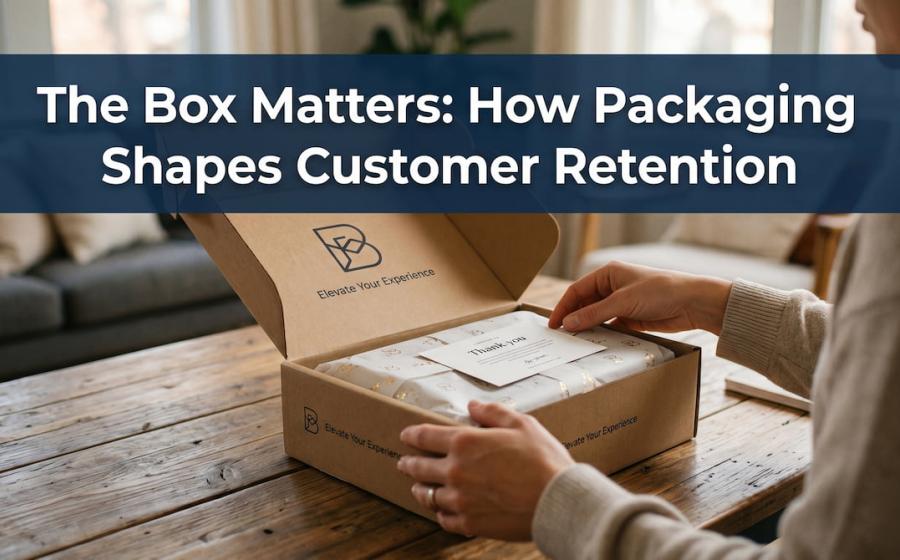

The physical package has become one of the most powerful and most underestimated touchpoints in the customer journey since products are increasingly discovered online and delivered to doorsteps. It is the first time a customer gets to touch your brand. And what they feel in that moment can determine whether they ever buy from you again.
This blog explores the research-backed relationship between packaging and customer retention, and what brands can do to turn a cardboard box into a loyalty engine.
First Impressions Are Made in Seconds
For e-commerce brands especially, packaging is not just a container; it is the very first physical interaction a customer has with the business. Research confirms that customers form judgments about product quality and brand value within seconds of receiving their package.
This matters because perception drives repeat purchase. When packaging looks cheap or poorly designed, customers unconsciously assume the product inside is of lower quality, even if it is exceptional. That premature judgment alone can trigger negative reviews before a customer has even used what they bought.
The Numbers Are Unambiguous
The data on packaging's influence is striking across several dimensions.
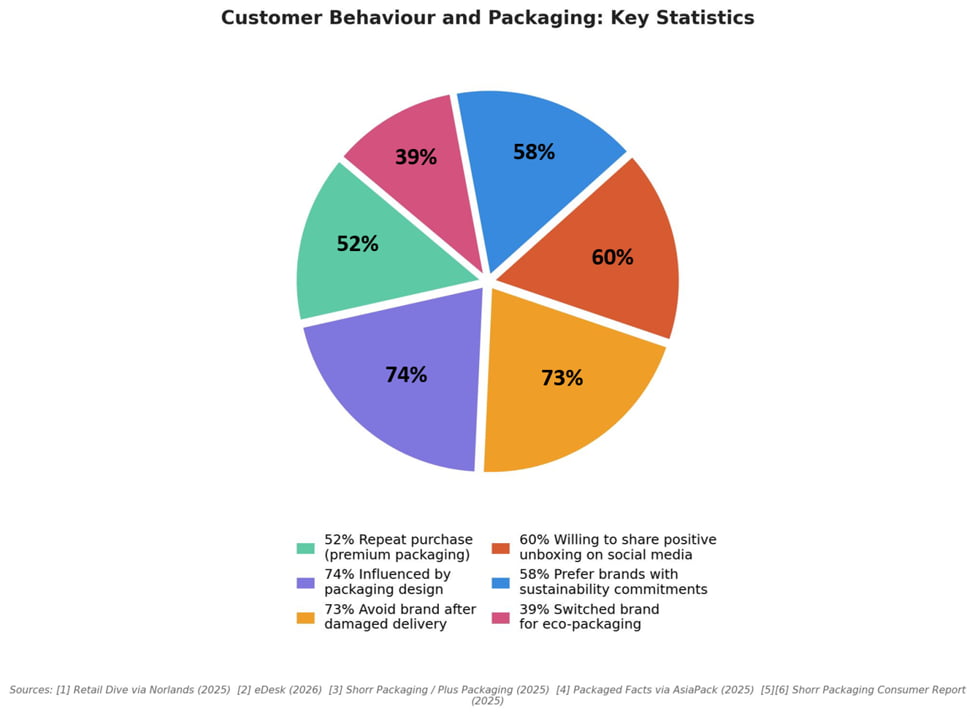
Design shapes buying decisions. A significant 74% of consumers consider packaging design when making purchase decisions. This is not a small or niche segment; it represents the overwhelming majority of buyers.
Premium packaging drives repeat purchases. According to research cited by Retail Dive, 52% of online shoppers are likely to make repeat purchases if they receive products in premium packaging. This statistic alone reframes packaging from a cost line to a retention investment.
Damage destroys loyalty. A Shorr Packaging survey found that 73% of consumers are less likely to purchase from a brand again if their product arrives damaged. Poor packaging is not just a customer service problem; it is an active churn driver.
Positive experiences boost repeat rates by 50%. A study of e-commerce unboxing experiences found that customers who had positive unboxing experiences showed 50% higher repeat purchase rates than those with neutral packaging experiences.
The Psychology of Unboxing
The excitement of opening a well-designed package is not merely anecdotal. Research shows that unboxing triggers positive emotions including joy, excitement, and anticipation, which are tied to dopamine release. This emotional connection significantly impacts customer loyalty by creating a memorable and shareable experience.
Importantly, that emotional ripple extends beyond the individual customer. According to a study by Packaged Facts, 60% of consumers say they would share their positive unboxing experience on social media. Premium packaging doubles as organic marketing; one happy customer becomes an advocate for dozens of potential new ones.
Brands like Apple have built a significant part of their identity around this phenomenon: packaging that feels deliberate, considered, and special to open. The sense of value it creates before the product is even seen is a carefully designed experience.
Sustainability: From Nice-to-Have to Retention Driver
Consumer expectations around sustainability have shifted dramatically, and packaging is at the centre of it.
According to research by Towards Packaging, 69% of shoppers expect the brands they support to offer sustainable packaging. More than half, 58%, prefer brands that have publicly committed to sustainability goals, and 39% of consumers have already switched to a competitor that offers sustainable packaging over one that does not.
The generational divide is also notable. Nearly half of Gen Z (49%) and Millennials (47%) say they are willing to pay a premium for eco-friendly packaging, compared to 41% of Gen X and 37% of Boomers. For younger cohorts especially, packaging sustainability is not a preference; it is an expectation.
Brands that embrace eco-friendly materials see measurable retention benefits: repeat purchases are up 33% for products with certified sustainable packaging, and brand loyalty increases 28% with transparent sustainability claims. McKinsey research reinforces this: brands whose products carry ESG-related claims consistently outgrow competitors and earn stronger repeat purchase loyalty.
Branded Packaging Inserts and Personalisation
Beyond the outer box, the details inside matter enormously. Personalised touches including a handwritten thank-you note, a discount voucher, or a small surprise freebie create an emotional bond that plain packaging simply cannot replicate.
Custom printed boxes that showcase a brand's logo, colours, and unique design create a cohesive and memorable unboxing experience. This personalisation not only delights customers but reinforces brand recognition across every subsequent interaction.
Research consistently shows that premium packaging can increase repeat purchase rates by 40 to 61%, with customers who experience high-quality unboxing being 50% more likely to return compared to those receiving standard packaging.
Return-Friendly and Functional Packaging
Customer retention is not just about the joy of receiving; it is also about the ease of returning. Return-ready packaging, which allows customers to reuse the original box for returns without hassle, reduces friction and reinforces a sense of trust. When a brand makes the return process easy, it signals confidence in its products and respect for the customer's time.
Functional design also ensures products arrive undamaged during transit, which is directly tied to retention outcomes. As Shorr Packaging data confirms, damaged delivery is one of the single most powerful drivers of customer churn.
Packaging as a Growth Investment, Not a Cost Centre
The temptation in business is to minimise packaging spend. But treating packaging purely as a cost is a strategic error. A customer who has a great unboxing experience is more likely to return, more likely to refer others, and more likely to share the experience organically; all of which reduce customer acquisition costs for the next wave of buyers. Lower churn, higher average order value, stronger community: packaging contributes to all of these outcomes.
A 1% increase in customer satisfaction, driven by better packaging, faster shipping, or friendlier service, can lead to a 5% boost in retention. The returns compound over time in a way that is easy to underestimate at the point of investment.
Practical Takeaways for Brands
Based on the research, here is what the evidence supports:
- Invest in quality outer packaging. Structural integrity and design quality are the foundation. Protecting the product and signalling care at a glance should be non-negotiable.
- Create a thoughtful unboxing experience. Branded tissue paper, custom inserts, and personalised notes transform a transaction into an occasion. Small investments here have outsized retention effects.
- Commit visibly to sustainability. Given that nearly 4 in 10 consumers have already switched brands over packaging sustainability, this is no longer optional for companies competing for younger demographics.
- Use packaging as a two-way conversation. A thank-you note, a QR code linking to care instructions, or a discount for a next order keeps the relationship alive beyond the delivery moment.
- Measure it. A single question asking customers to rate their unboxing experience gives a baseline and a trend to track over time.
The data is clear: packaging is not merely packaging. It is the physical embodiment of your brand relationship at its most intimate moment. Done well, it accelerates loyalty, drives organic advocacy, and turns one-time buyers into repeat customers. Done poorly, it undoes everything your marketing, product, and customer service teams have worked to build.
In a marketplace where customer experience has overtaken price and product as the key brand differentiator, the box your product arrives in has never mattered more.