




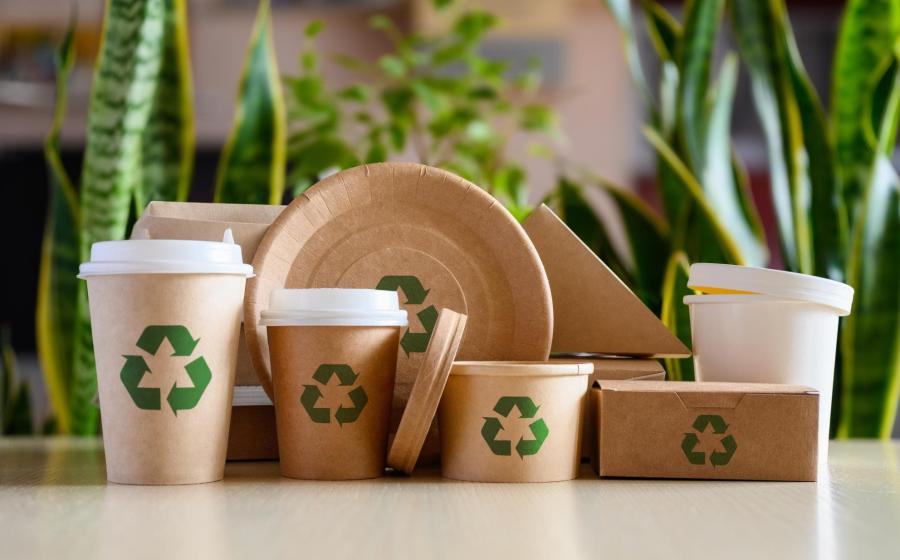

The European Union’s Packaging and Packaging Waste Regulation (PPWR) begins its general application across the EU today, marking a major shift in how packaging will be designed, manufactured, labelled and managed.
The regulation aims to reduce packaging waste, increase recycling, reduce dependence on virgin raw materials and strengthen the circular economy. It also establishes more harmonised packaging rules across EU Member States, helping businesses operating across European markets.
PFAS restrictions for food-contact packaging
One of the key measures taking effect is a restriction on PFAS (per- and polyfluoroalkyl substances) in food-contact packaging. Packaging containing PFAS above specified limits can no longer be placed on the EU market.
PFAS have been used in applications such as takeaway containers, fast-food wrappers, microwave popcorn bags, bakery paper and pizza boxes because of their water- and grease-resistant properties. The new restrictions are intended to reduce exposure to these persistent chemicals and their release into the environment.
What changes for packaging companies?
The PPWR introduces a broad framework covering the packaging lifecycle, from packaging design and material selection to reuse, recycling and waste management.
Among the important developments:
- Harmonised definitions and responsibilities for packaging producers and manufacturers.
- New marking and information requirements to improve identification and traceability.
- A harmonised EU packaging labelling system is planned from 2028 to support waste sorting.
- From 2030, most major obligations will apply, including measures to reduce packaging waste, limit unnecessary empty space and increase reuse.
- Packaging placed on the EU market will increasingly need to meet recyclability requirements.
- Recycled plastic content requirements will support greater use of secondary raw materials.
What does this mean for packaging design?
For packaging developers, the PPWR represents a move away from looking at packaging sustainability only at the end-of-life stage.
Material selection, lightweighting, recyclability, recycled content, reuse, labelling and packaging efficiency will increasingly need to be considered together during the design stage.
For flexible packaging manufacturers in particular, this could accelerate the development of simpler material structures, recyclable mono-material solutions, improved barrier technologies and alternative coatings.
The European Commission expects the regulation to support a more circular and competitive packaging sector while reducing resource consumption and environmental impacts.