




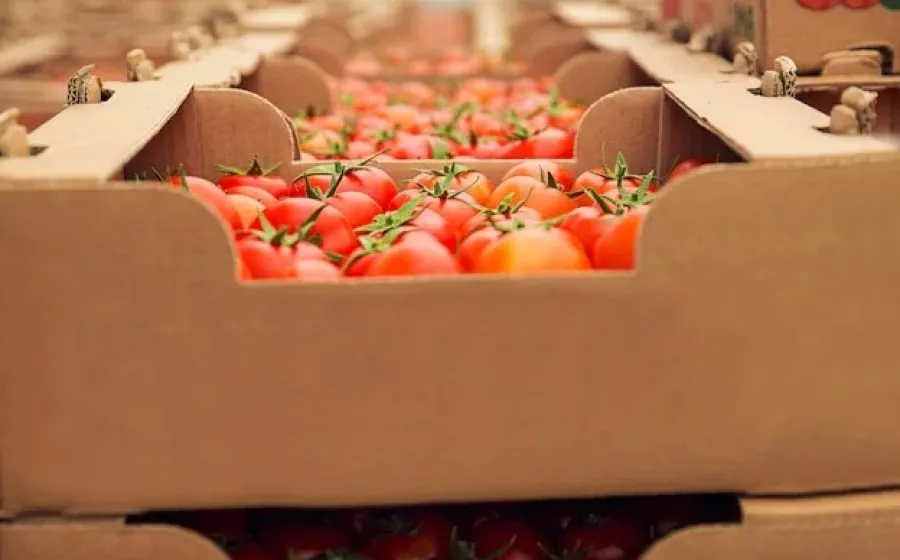

A tomato does not need a different box simply because it is July instead of January. But the conditions surrounding that box can change dramatically.
Fresh produce packaging operates within a much larger postharvest system. The crop itself has specific requirements for temperature, humidity and handling, while the journey from farm to retailer introduces its own variables: ambient weather, cooling infrastructure, transport time and the reliability of the cold chain.
That means there is no universal formula for fresh produce packaging. A package designed for one commodity, or for one supply chain, may not perform the same way for another.
The produce comes first
The starting point for packaging design is not the calendar. It is the commodity.
Different fruits and vegetables have very different storage and handling requirements. USDA’s Agriculture Handbook 66, a major reference on commercial storage and postharvest handling, documents commodity-specific requirements for temperature, humidity, respiration, chilling sensitivity and other factors that influence produce quality [1].
The differences can be substantial. Penn State’s produce handling guidance, for example, recommends storage temperatures of 32°F for carrots, 45–50°F for bell peppers and 55–70°F for tomatoes. Several commodities, including cucumbers, peppers and summer squash, can suffer chilling injury when exposed to temperatures that are too low, even when those temperatures are above freezing [2].
This is why fresh produce packaging cannot be treated as a generic container problem. The package has to support the environmental conditions that the particular commodity can tolerate.
Packaging does not replace the cold chain
One of the most important distinctions in produce packaging is between controlling temperature and supporting temperature control.
A corrugated carton does not cool a load of produce on its own. Pre-cooling, refrigerated storage and temperature-controlled transport do most of that work. Packaging, however, can help those systems work effectively.
Ventilation openings in produce cartons, for example, can facilitate airflow and cooling. But there is a trade-off: every opening can reduce the structural strength of the package, so ventilation has to be balanced against stacking performance and protection from crushing [3].
The same trade-off appears in moisture management. NC State notes that cold temperatures and high humidity can significantly weaken corrugated fiberboard. Unless a container is appropriately treated, absorbed moisture can reduce its strength by as much as 75%. Moisture-resistant coatings and alternative container designs can therefore be important where produce is hydrocooled, iced or exposed to persistently humid conditions [3].
In other words, the package is not separate from the cold chain. It is one of the components that has to function within it.
When summer changes the problem
Hot weather can make temperature management more demanding, particularly when produce moves through parts of the supply chain before it has been adequately cooled.
Freshly harvested produce continues to respire and generate heat. If that field heat is not removed efficiently, deterioration can accelerate. Packaging therefore needs to allow the cooling method, such as forced-air cooling or hydrocooling, to work effectively [2][3].
Humidity can create another challenge. Moisture may accumulate around produce or be absorbed by fiber-based packaging, reducing structural strength and increasing the risk of package failure during stacking and transport [3].
This does not necessarily mean that every tomato shipped in summer needs an entirely different package from one shipped in winter. It means that higher ambient temperatures and humidity may place greater demands on cooling, ventilation and moisture resistance.
The packaging solution has to be evaluated alongside the conditions the product will actually encounter.
Winter creates a different risk: and it is not always freezing
Cold weather is not simply the opposite problem.
For some commodities, freezing is an obvious risk. But many fresh fruits and vegetables can also suffer chilling injury at temperatures well above their freezing point.
Penn State notes that tomatoes exposed to temperatures below 50°F can experience poor flavour and, with longer exposure, abnormal ripening, pitting, shrivelling and increased susceptibility to decay. Cucumbers, meanwhile, are susceptible to chilling injury below approximately 45°F [4].
This matters for packaging and logistics because winter temperature protection cannot be based on a single threshold such as 0°C. The acceptable temperature range depends on the commodity being transported.
A package or transport system that protects one crop from freezing may still expose another to damaging temperatures if its specific storage requirements are ignored.
Geography can matter as much as the season
The same package can perform very differently depending on where the supply chain operates.
In regions with reliable pre-cooling, refrigerated warehouses and temperature-controlled transport, packaging can be designed as part of a relatively stable cold chain. Where those systems are inconsistent or unavailable, the package may have to contend with greater temperature fluctuations, rougher handling or longer periods outside controlled storage.
FAO has identified inadequate temperature management, storage, transport and handling as major contributors to postharvest losses in perishable produce, particularly in developing supply chains [5]. Poor packaging can compound these problems by exposing produce to compression, vibration and physical damage [5].
This is why copying a packaging solution from one market to another does not necessarily work. A design optimised for a highly controlled distribution network may perform differently in a supply chain with longer transit times, intermittent refrigeration or more demanding handling conditions.
The real packaging question is: what journey does the produce have to survive?
Seasonality matters. Summer heat, winter cold and changing humidity can all alter the conditions surrounding a shipment.
But season is only one variable.
The more useful way to think about fresh produce packaging is to start with four questions:
- What are the commodity’s temperature and humidity requirements?
- How quickly and by what method will it be cooled?
- What physical stresses will it encounter during storage and transport?
- How reliable is the cold chain from harvest to retail?
Only then does the packaging solution start to make sense.
The goal is not to create a “summer box” or a “winter box.” It is to design packaging that works with the crop, the cooling system and the supply chain it will actually experience.
For fresh produce, the smartest package is rarely the one that does the most on its own. It is the one that fits into the larger system designed to keep the product fresh.
Sources
[1] USDA Agricultural Research Service. Agriculture Handbook 66: The Commercial Storage of Fruits, Vegetables, and Florist and Nursery Stocks. USDA Agricultural Research Service – Agriculture Handbook 66
[2] Penn State Extension. Produce Packing Guidelines. Updated December 2025. Penn State Extension – Produce Packing Guidelines
[3] NC State Extension Publications. Chapter 9: Produce Packaging. NC State Extension – Produce Packaging
[4] Penn State Extension. Keeping Produce Fresh: Best Practices for Producers. Penn State Extension – Keeping Produce Fresh
[5] Food and Agriculture Organization of the United Nations (FAO). Horticultural Perishables: The Status. FAO – Horticultural Perishables: The Status