




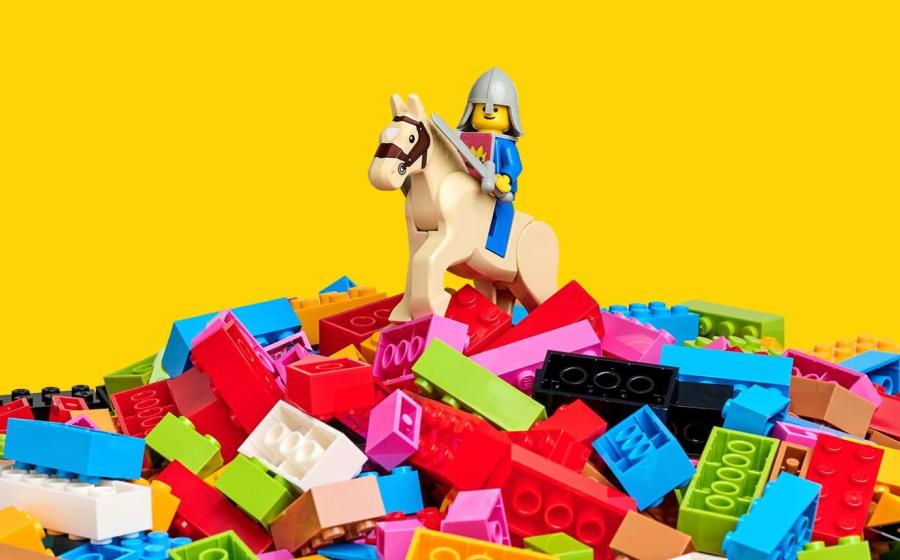

The LEGO Group has launched its latest “Built for Tomorrow” campaign, spotlighting the durability and reusability of LEGO bricks while highlighting the company’s ongoing efforts to reduce its environmental footprint through alternative materials, renewable energy and paper-based packaging.
The LEGO Group is reinforcing its sustainability ambitions with the latest edition of its “Built for Tomorrow”campaign, using the enduring nature of its iconic LEGO bricks to communicate a broader message about products designed to last, be reused and remain relevant across generations.
Launched on September 3, 2026, the campaign features the return of the LEGO Knight from the classic 1978 Yellow Castle set and highlights how LEGO is working to combine product durability with changes across its materials, operations and packaging. According to LEGO, 74% of adults surveyed believe products should be built to last and used multiple times, reinforcing the consumer relevance of durability and reuse.
Designing for Rebuilding and Reuse
Durability has been part of the LEGO product philosophy since the introduction of the modern LEGO brick in 1958. The company's latest campaign builds on this principle, positioning long product life and repeated use as important elements of a more sustainable consumption model.
For LEGO, the concept extends beyond the bricks themselves. The company is simultaneously working to reduce the environmental impact associated with raw materials, manufacturing, energy consumption and packaging.
Annette Stube, Chief Sustainability Officer at the LEGO Group, said the campaign celebrates the enduring nature of LEGO play while highlighting actions being taken to reduce the company's environmental impact for future generations.
Shift Towards More Sustainable Materials
One of the key areas of LEGO's sustainability strategy is the transition towards renewable and recycled sources for the materials used in its products.
The company is increasing its use of materials sourced through certified mass-balance approaches, alongside physically recycled and renewable materials.
LEGO's material innovation includes examples such as flexible elements made using material derived from Brazilian sugarcane, recycled content sourced from fishing nets and engine oil for selected tyres, and transparent elements containing material from artificial-marble countertop offcuts.
The approach reflects a broader challenge facing consumer-product manufacturers: finding lower-impact material alternatives while maintaining the quality, safety, durability and performance expected from the finished product.
Paper-Based Packaging Takes Centre Stage
Packaging is another important component of LEGO's sustainability roadmap.
The company is reducing its reliance on single-use plastic packaging and transitioning towards paper-based alternatives. LEGO has been progressively converting its packaging lines from plastic bags to sustainably sourced, technically recyclable paper-based bags.
The company previously reported that more than half of its packaging lines had already transitioned away from single-use plastic bags, and its current roadmap aims to complete the transition across its remaining packaging lines by 2027.
For the packaging industry, this transition is particularly relevant because LEGO's packaging needs to protect products, support automated packing operations and provide a reliable consumer experience while also reducing dependence on virgin fossil-based plastics.
Investment in Sustainability
LEGO's sustainability ambitions are also being supported by increased investment.
The company says its total sustainability-related spend increased by 20% in 2025 compared with 2024, and was more than three times its 2022 level.
At the manufacturing level, LEGO is also expanding renewable-energy generation. Its factories are adding solar capacity, while construction began in June 2026 on the company's largest solar park to date in Billund, Denmark. The planned installation comprises approximately 160,000 solar panels and is expected to generate around 99 GWh of electricity annually once operational in 2027.
Moving Beyond “Recyclable” Packaging
LEGO's approach illustrates a broader shift taking place across the consumer-packaging industry.
Sustainability strategies are increasingly moving beyond simply asking whether a package is recyclable. Brands are examining the complete lifecycle of a product and its packaging — from material sourcing and manufacturing to packaging design, energy consumption, use and end-of-life.
For LEGO, the principle is particularly relevant because the core product itself is designed around long-term use, rebuilding and passing between generations.
The company's packaging transition therefore forms part of a wider strategy in which product longevity, material innovation, renewable energy and packaging redesign work together to reduce environmental impact.
A Broader Message for the Packaging Industry
The “Built for Tomorrow” campaign demonstrates how sustainability can increasingly become embedded across a company's entire value chain rather than being treated as a standalone packaging initiative.
For packaging professionals, LEGO's progress offers several areas to watch: the scalability of paper-based alternatives, the performance of renewable and recycled materials, the economics of material transition and the ability of manufacturers to integrate sustainability without compromising product quality or operational efficiency.
As consumer expectations and regulatory requirements continue to evolve, the next generation of packaging will increasingly need to deliver performance today while being designed with tomorrow in mind.