



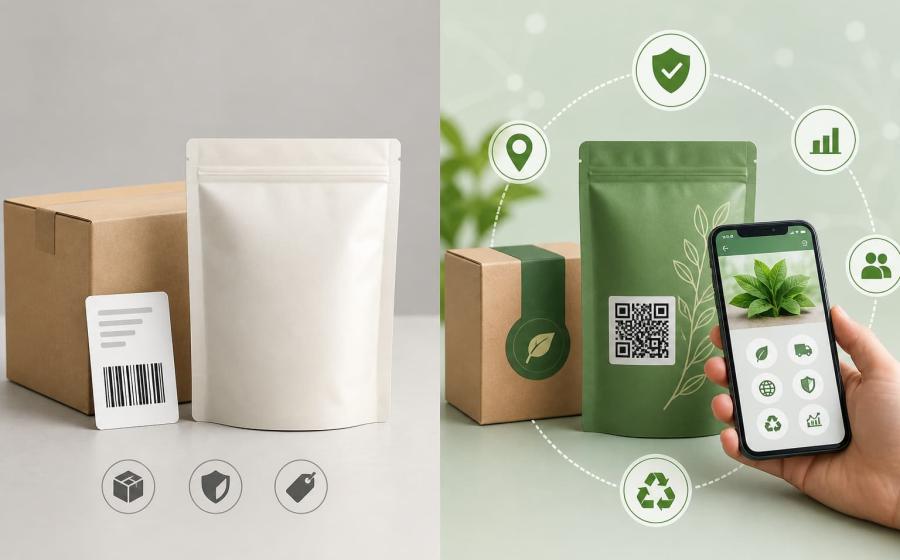

As the packaging industry evolves, the shift from traditional packaging to smart and connected solutions is becoming more visible. Here’s a simple comparison to understand how they differ:
Feature Traditional Packaging Smart & Connected Packaging
Purpose Protect and contain the product Protect + communicate + track
Consumer Interaction None Interactive (QR codes, NFC, etc.)
Information Access Printed labels only Digital, real-time information
Traceability Limited Full supply chain visibility
Anti-Counterfeiting Basic (holograms, barcodes) Advanced (digital verification, tracking)
Sustainability Tracking Not possible Can track recycling, origin, footprint
Marketing Capability Static Dynamic (videos, campaigns, engagement)
Technology Use Minimal High (sensors, digital tools)
Cost Lower Higher (but decreasing over time)
Flexibility Fixed once printed Updatable digital content
Key Takeaway
Traditional packaging is static and functional, while smart packaging is dynamic and interactive.
- Traditional packaging ends at the shelf
- Smart packaging continues the journey with the consumer
Why Smart Packaging is Gaining Attention
- Builds stronger customer engagement
- Helps brands fight counterfeiting
- Supports regulatory compliance
- Enables data-driven decisions
Should companies switch completely?
Not always.
For many businesses, the best approach is a hybrid model:
- Use traditional packaging for cost efficiency
- Add smart features (like QR codes) where needed
This allows companies to balance cost, performance, and innovation.
Final Thought
Smart packaging is not here to replace traditional packaging overnight—but it is reshaping the future.
Companies that start adopting it now will be better prepared for:
- Digital transformation
- Consumer expectations
- Future regulations