



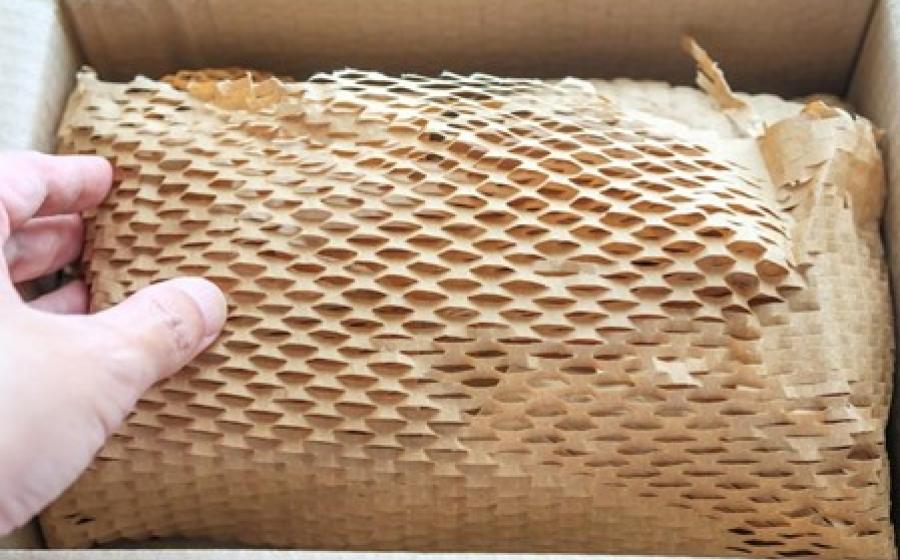

There is a cardboard box sitting somewhere near you right now. Maybe it held your last online order, your breakfast cereal, or a shipment of electronics. It is easy to overlook. It is also one of the most sophisticated material innovations in modern commerce, and its story is only getting more interesting.
Fiber-based packaging, which includes corrugated cardboard, molded pulp, paperboard cartons, kraft paper, and honeycomb board, has quietly become the backbone of how the world moves and protects goods. And it is no longer playing second fiddle to plastic. It is winning.
A Market on the Move
The numbers alone tell a compelling story. The global fiber-based packaging market was valued at roughly $300 billion in 2024 and is on track to surpass $450 billion by 2030 [1]. That is not niche growth. That is an industry reshaping itself in real time, driven by regulatory tidal waves, shifting consumer values, and a generation of engineers who figured out how to make paper tougher than foam.
Factoid: Recycled fiber now accounts for more than 53% of all fiber-based packaging materials globally, making post-consumer waste one of the world's most valuable raw material streams [1].
The Asia-Pacific region is where things get especially dramatic. With China's sweeping crackdowns on single-use plastics, India's booming e-commerce economy, and Japan's reputation for precision material innovation, the region is forecast to grow at nearly 8% annually through 2030 [2]. Every parcel shipped from a Southeast Asian warehouse is a data point in fiber's favor.
The Unlikely Hero: Corrugated Cardboard
Ask most people to name a revolutionary material and corrugated cardboard will not top their list. That is a mistake. The humble corrugated box currently holds the largest share of the fiber packaging market at nearly 35% of total revenue [2], and for good reason. Its fluted inner layer is a structural marvel, distributing compressive force across a surface in a way that has kept everything from wine bottles to semiconductors intact for over a century.
Factoid: About 90% of all products shipped across the US are packaged in corrugated cardboard [5].
Today's corrugated boxes are not the same ones your grandparents received. AI-guided structural design algorithms are now being introduced to optimize wall thickness, flute geometry, and panel configuration for individual product types [2]. Companies are printing QR codes directly onto corrugated surfaces to enable reverse logistics and authentication. Some designs incorporate RFID strips into the fiber itself. The box is increasingly becoming smart.
From Egg Carton to iPhone: The Rise of Molded Pulp
Molded fiber packaging is perhaps the most visually striking proof that sustainable does not mean primitive. Made by shaping slurries of recycled paper pulp into precise three-dimensional forms, molded pulp trays have long protected eggs. Now they are protecting semiconductors.
Factoid: Consumer electronics manufacturers have developed anti-static molded fiber trays capable of dissipating electrical charges below 200 volts, making them viable replacements for EPS foam in air freight of sensitive components [2].
The molded pulp segment is one of the fastest-growing corners of the packaging world, projected to climb from $9.2 billion in 2025 to $16.5 billion by 2035 [7]. Apple accelerated this story publicly when it began replacing plastic inserts in iPhone and MacBook packaging with precision-molded fiber trays, demonstrating that premium feel and environmental credibility are not mutually exclusive [1]. The luxury and personal care sector followed. Personal care and cosmetics now register the most aggressive growth rate in the entire fiber packaging sector, as prestige brands deploy embossed molded-fiber jars, inserts, and sleeves as tangible sustainability narratives [2].
Why Plastic Is Losing the Argument
The shift away from plastic is not simply a trend. It is a regulatory reckoning. The European Union's Packaging and Packaging Waste Regulation, extended producer responsibility schemes across India, Canada, and Southeast Asia, and California's PFAS prohibitions in food-contact materials are collectively transforming compliance from a checkbox into a strategic imperative [2].
Fiber-based packaging generally meets these mandates without costly reformulation. It is already recyclable. It is already biodegradable. And it breaks down in weeks to months rather than the hundreds of years required for conventional plastics.
Factoid: Paper and cardboard packaging achieved a recycling rate of 83.2% in the EU in 2022, the highest of any packaging material including metal, glass, and plastic [6].
The environmental story goes deeper than recyclability. Responsibly managed forests certified under FSC or PEFC standards actively sequester carbon dioxide. Life cycle assessments consistently show fiber-based packaging generating significantly fewer greenhouse gas emissions than equivalent plastic formats. When International Paper completed its $7.2 billion acquisition of DS Smith on January 31, 2025, it signaled to the entire industry that the future of sustainable packaging is fiber, and it is worth betting billions on [3].
The Challenges Are Real (And Being Solved)
No material revolution comes without friction. Moisture sensitivity has historically limited fiber's use in cold chain, food delivery, and humid environments. Water-resistant coatings can increase production costs by 10 to 15%, a meaningful burden for smaller producers [4].
But the industry is not standing still. Stora Enso, the Finnish-Swedish forestry giant, has long pioneered micro-fibrillated cellulose (MFC) technology that strengthens fiber mesh and supports moisture-resistance properties without relying on fossil-based coatings [8]. Paboco (The Paper Bottle Company) launched full-scale production of fiber-based bottles at its manufacturing site in Slangerup, Denmark in early 2024, with the goal of producing over 20 million bottles by the end of 2025 [9]. Its Pioneer Community partners include Coca-Cola, L'Oreal, Carlsberg, and Procter & Gamble [9]. And hemp-based pulp facilities are being assessed across North America, with some expected to produce 30 tons of industrial hemp pulp daily by late 2026 [7].
Factoid: Over 70% of e-commerce companies in developed markets now use fiber-based materials as their primary packaging substrate, driven by both consumer pressure and corporate sustainability targets [4].
The innovation pipeline is wide open. Fiber composites blending strength, lightness, and full recyclability. Smart packaging with embedded sensors printed directly onto paperboard. Seaweed-fiber hybrid materials for highly specialized applications. The material science community is treating fiber the way it once treated carbon fiber: as a platform for reinvention.
The Story Is Still Being Written
Fiber-based packaging is not a compromise. It is not the eco-friendly option you choose at the expense of performance. It is increasingly the best option, full stop, for a widening range of applications across food and beverage, electronics, personal care, e-commerce, and beyond.
It started as a way to get eggs from farm to table without breaking them. It became the system that moves billions of parcels around the planet every year. And it is now the material at the center of one of the most significant shifts in industrial history: the moment global commerce decided that what products are wrapped in matters as much as what is inside.
That battered cardboard box near you? It is just getting started.
Ready to explore fiber-based packaging solutions for your business? Share this article with your sustainability or procurement team, or leave a question in the comments below.
Meta Description: Fiber-based packaging is transforming global supply chains. Discover the real story behind its explosive growth, environmental benefits, and why the world's biggest brands are betting big on it.
Sources
1. Grand View Research. Next-Gen Paper-Based and Fiber-Based Packaging Market Size, Share & Trends Analysis Report, 2025-2030. grandviewresearch.com
2. Mordor Intelligence. Fiber-Based Packaging Market Size & Share Analysis, 2025-2030. mordorintelligence.com
3. International Paper / PRNewswire. International Paper Completes Acquisition of DS Smith. January 31, 2025. prnewswire.com
4. Global Growth Insights. Fiber Based Packaging Market Size, Share & Industry Statistics, 2033. globalgrowthinsights.com
5. Business Waste. Paper Recycling Facts & Statistics. businesswaste.com
6. Statista / The Sustainable Agency. Paper and cardboard packaging recycling rate in the EU, 2022. thesustainableagency.com
7. Towards Packaging. Molded Fiber Packaging Market Size, 2025-2035. towardspackaging.com
8. Stora Enso. Micro-Fibrillated Cellulose (MFC) for Packaging. storaenso.com
9. Packaging Europe. Paboco Commences Full-Scale Production for Fibre-Based Bottles. February 2024. packagingeurope.com