




Packaging is no longer just about protecting a product. Today, it is becoming smart, digital, and interactive. With the rise of technology, brands are turning ordinary packaging into a tool for communication, tracking, and engagement.
This new approach is called smart and connected packaging.
What is smart & connected packaging?
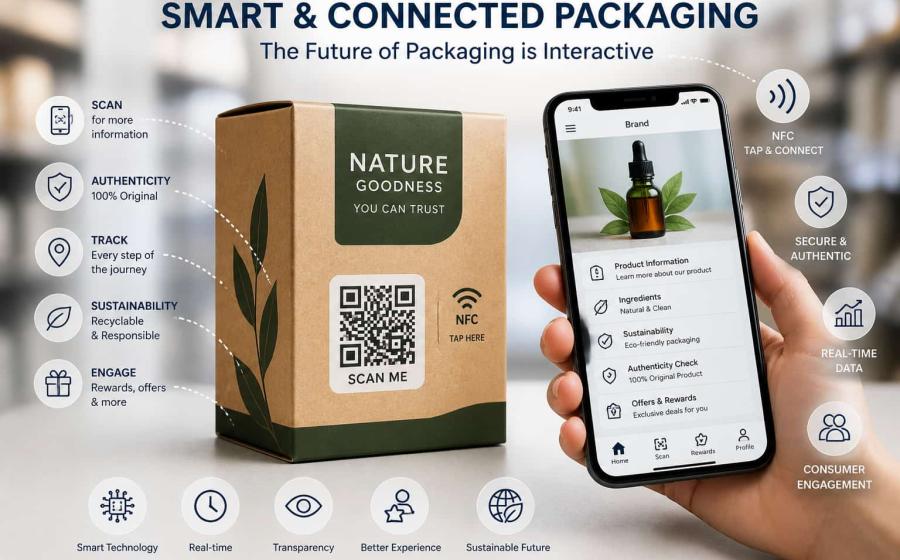
Smart packaging uses technologies like:
- QR codes
- NFC (tap-to-connect) tags
- Sensors and digital markers
These features allow packaging to share information, track products, and interact with consumers using smartphones or digital systems.
Why is it growing so fast?
There are three main reasons:
1. Consumer engagement
Customers today want more than just a product. By scanning a QR code, they can:
- See product details
- Watch videos
- Check authenticity
Packaging becomes a marketing tool.
2. Traceability and transparency
Brands can track products across the supply chain. This helps:
- Reduce counterfeiting
- Improve product safety
- Build trust with customers
This is especially important in food and pharmaceutical packaging.
3. Regulatory support
Governments are encouraging better tracking and labeling systems. Smart packaging helps companies meet these requirements easily.
How companies are using it
Smart packaging is already being used in many ways:
- Food industry: Showing freshness, origin, and expiry details
- Pharma industry: Anti-counterfeiting and patient safety
- Retail: Interactive campaigns and promotions
- Luxury brands: Authenticity verification
Key technologies behind it
QR codes: The most common and cost-effective solution. Easy to scan and widely used.
NFC tags: Allow “tap” interaction without scanning. Used for premium products.
Digital watermarks: Invisible codes embedded in packaging for sorting and tracking.
Sensors: Used to monitor temperature, freshness, or damage.
Benefits for brands
Smart packaging offers multiple advantages:
- Better customer experience
- Stronger brand connection
- Improved supply chain visibility
- Protection against fake products
- Support for sustainability tracking
Challenges to consider
Despite its benefits, there are some challenges:
- Higher cost compared to traditional packaging
- Technology integration
- Consumer awareness and adoption
However, as technology becomes cheaper, adoption is increasing rapidly.
The future of packaging
Smart packaging is expected to become standard in the coming years. It will play a key role in:
- Digital transformation
- Sustainability tracking
- Personalized consumer experiences
Smart and connected packaging is changing how brands interact with consumers. It is no longer just packaging—it is a powerful communication and data tool.
Companies that adopt this trend early will have a clear advantage in the future.