



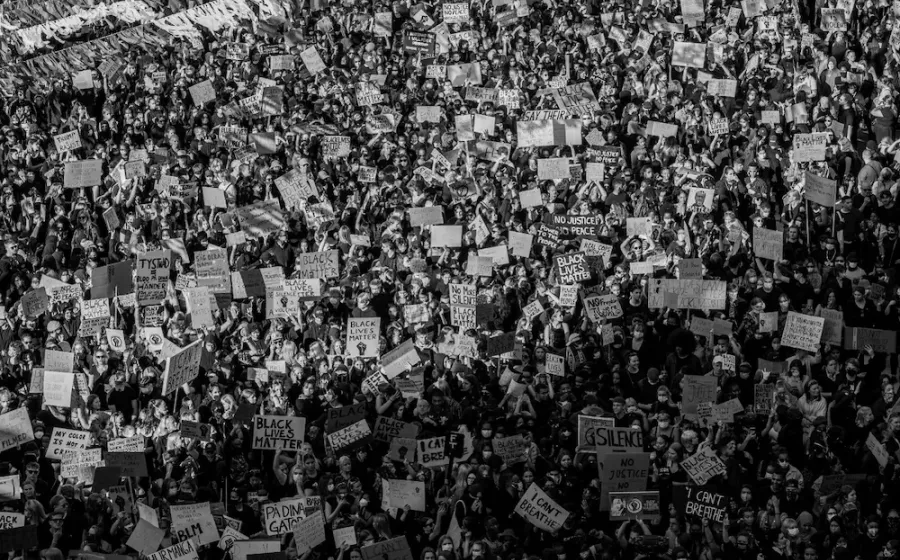

Every protest leaves two records behind. One is written in slogans, banners and news footage. The other is written in plastic bottles, food wrappers, tea cups and thermocol plates left scattered across the ground once the crowd disperses. Packaging waste at protest sites is rarely discussed alongside the politics of the movement itself, yet it has become one of the most visible, and most avoidable, forms of urban litter in India.
The Scale of the Problem
India generates close to 3.9 million tonnes of plastic waste every year, or roughly 10,689 tonnes a day, according to the Central Pollution Control Board's 2022-23 annual report5. Packaging accounts for a large share of this figure. Government data on Extended Producer Responsibility puts registered plastic packaging volumes at around 3 million tonnes for a single year, of which 2.5 million tonnes were processed under recycling certificates4. Mass gatherings concentrate this waste stream into a single site over a short period, which is exactly what makes protests, rallies and sit ins such a visible test case for packaging waste management.
The Indian Case: Singhu Border and Jantar Mantar
The 2020-21 farmers' protest at Delhi's Singhu border is the clearest illustration of what sustained, large-scale demonstrations do to packaging waste. Community kitchens, known as langars, fed thousands of people a day and packed food and tea into plastic bottles and boxes for protesters to carry home. Reporting from the site describes garbage piling up between collections, with sanitation staff going days without clearing it and protesters pointing to poor drainage as stagnant water added to the mess8. Much of this waste, including plastic bottles, thermocol plates, foil wraps and cardboard, did not go to a municipal collection system at all. It was gathered informally by ragpicker families living near the site, who filled sacks with recyclable plastic and sold it onward, in some cases earning far more from bottle collection than from their usual work1. Their labour, not any formal civic infrastructure, kept the protest site from becoming a permanent dumping ground.
A more recent example comes from Jantar Mantar in Delhi, a traditional protest ground, following a large gathering tied to the NEET protests. The morning after, a group of young volunteers returned with brooms and garbage bags to clear plastic bottles, paper cups and food packaging themselves, rather than leaving the job entirely to municipal sanitation workers3. The episode was notable precisely because it broke from the norm described in the same report: large public gatherings usually leave roads littered with exactly this kind of packaging waste, with cleanup falling only on civic staff after the fact.
What Better Management Looks Like
Three shifts would make a measurable difference at Indian protest sites. First, organisers of langars and community kitchens can default to reusable steel cups and plates instead of single-use plastic and thermocol, a switch already common in Sikh community kitchens elsewhere and well within reach given the scale of resources protest sites already mobilise, as seen in the roti-making machines, boilers and solar panels set up at Singhu2. Second, city authorities can pre-position segregated waste bins and coordinate directly with the informal ragpicker networks already doing this work at no public cost, rather than leaving collection to chance. Third, India's Ministry of Environment, Forest and Climate Change has already prohibited a list of identified single-use plastic items, including plastic cutlery, straws, stirrers and certain expanded polystyrene (thermocol) products6, and similar waste-reduction requirements could be incorporated into permits for large public assemblies, so that organisers plan for waste from the outset rather than after the fact.
This is not only an Indian problem, though the Indian angle differs. In 2022, residents of Plachimada, a Kerala village whose groundwater a Coca-Cola bottling plant had been accused of contaminating, protested the company's sponsorship of that year's COP27 climate summit. Separately, environmental watchdog groups pointed out that the same company had admitted to producing 120 billion throwaway plastic bottles a year, arguing that record undercut its credibility as a climate sponsor7. Both cases show packaging waste and its makers rarely facing scrutiny in the rooms where climate commitments get made. India's protest sites close that gap out of necessity: community responsibility paired with the livelihoods of the waste pickers who already do this work every day.
The Takeaway
Packaging waste at protests is a policy blind spot precisely because it sits at the intersection of two things nobody wants to regulate too closely: civic assembly and disposable packaging. But the fixes are neither costly nor complicated. Reusable serviceware at community kitchens, formal recognition of ragpicker labour, and waste planning built into permits for public gatherings would turn protest sites from a recurring litter problem into a demonstration of exactly the kind of packaging discipline India is already trying to build nationwide.
Sources
- PARI Education
- The Tribune (India)
- The Better India
- PIB, Government of India (EPR Guidelines)
- CPCB Annual Report 2022-23, via CEED India
- PIB, Ministry of Environment, Forest and Climate Change
- Al Jazeera
- The Tribune (India)