




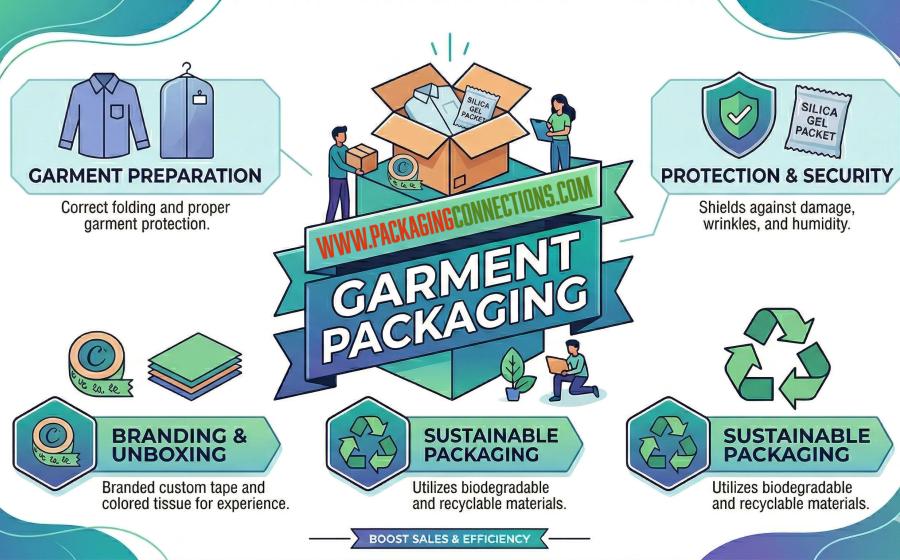

The Complete Guide to Garment Packaging
Process Flow, Materials, Designs, Variations & Modern Innovations
In this comprehensive guide, we explore the full garment packaging process flow, the wide spectrum of packaging variations, cutting-edge design strategies, material choices, and the modernization trends reshaping the industry.
Why Garment Packaging Matters in the Apparel Industry
In 2024, the global apparel packaging market was valued at over USD 18 billion and continues to grow at a CAGR of approximately 5.8%, driven by booming e-commerce, rising consumer expectations, and stricter sustainability regulations. Garment packaging serves a multi-layered purpose:
- Product Protection: Prevents damage from moisture, dust, insects, and physical impact during transit and storage.
- Brand Identity: Reinforces brand values through colors, logos, typography, and tactile experiences.
- Retail Presentation: Influences purchasing decisions at the point of sale through visual merchandising.
- Compliance & Labeling: Carries mandatory information such as care instructions, fiber content, country of origin, and size.
- Sustainability Signaling: Communicates a brand's environmental commitments through material choices and design.
Garment Packaging Process Flow: Step by Step
A well-defined packaging process flow ensures quality consistency, reduces waste, and accelerates order fulfillment. Here is the standard garment packaging workflow used in modern apparel facilities:
Step 1 — Quality Inspection (Pre-Packaging)
Before any garment is packaged, it undergoes a thorough quality control (QC) check. Trained inspectors verify stitching integrity, color accuracy, measurements against spec sheets, defect-free fabric surfaces, and correct labeling. This step is critical, defective garments must be quarantined before packaging to prevent downstream customer complaints and costly returns.
Step 2 — Pressing & Finishing
Garments are ironed, steamed, or tunnel-finished to remove creases and present a retail-ready appearance. For items like suits and formal wear, this stage is especially critical. Steam tunnels, form finishers, and hot-air chambers are commonly used at industrial scale to handle thousands of units per shift efficiently.
Step 3 — Tagging & Labeling
Once pressed, garments receive their hangtags, price tags, RFID tags (where applicable), care labels, and size stickers. Automatic tagging guns, label applicators, and RFID encoding stations are integrated into modern packaging lines. Barcodes and QR codes at this stage enable real-time inventory management and supply chain traceability.
Step 4 — Folding
Garments are folded to match the packaging dimensions, whether a flat poly bag, a box, or a hanger. Folding boards ensure uniformity across thousands of units. Automated folding machines handle t-shirts, jeans, knitwear, and other basic items, while delicate garments like embroidered tops may be folded manually. Tissue paper inserts protect fold lines and maintain shape during transit.
Step 5 — Primary Packaging
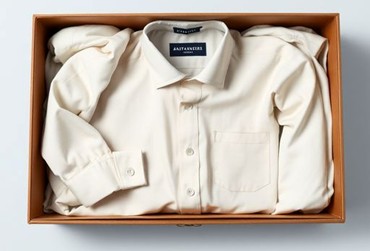
The garment is placed into its primary packaging unit, a polybag, tissue-wrapped box, biodegradable mailer bag, or garment bag. Heat sealers or self-adhesive strips secure the packaging. For premium brands, this stage includes insertion of brand-enhancing elements such as scented tissue, thank-you cards, stickers, or ribbon ties.
Step 6 — Secondary & Tertiary Packaging
Multiple packaged garments are grouped into corrugated cartons (secondary packaging) according to size ratios, style assortments, or retailer planogram requirements. Cartons are lined, packed, and sealed with pressure-sensitive tape. For bulk shipments, cartons are palletized and stretch-wrapped (tertiary packaging) before being loaded into containers.
Step 7 — Carton Marking & Documentation
Each carton is marked with shipping marks, PO numbers, destination ports, carton numbers, gross and net weights, and content descriptions per buyer requirements. Packing lists, commercial invoices, and customs documentation are prepared and cross-checked at this stage to ensure smooth customs clearance.
Step 8 — Final Inspection & Dispatch
A pre-shipment inspection (PSI), often conducted by third-party auditing firms like SGS, Bureau Veritas, or Intertek, verifies carton quantities, packing methods, and random unit checks before goods are dispatched to the freight forwarder for export.
Types & Variations of Garment Packaging
Garment packaging varies widely based on product type, retail channel, price point, and target market. Here is a breakdown of the most common packaging types:
1. Polybag Packaging
The most widely used packaging format in the global apparel industry. Polybags are lightweight, low-cost, and transparent, allowing the garment to be visible. They are available in LDPE, HDPE, and biodegradable variants. Common applications include fast-fashion basics, everyday casualwear, socks, and innerwear. Sizes range from small (for folded t-shirts) to large (for denim jackets or coats).
2. Hanger Packaging

Garments are shipped and displayed on hangers, typically made from plastic, wood, or metal, with a clear garment cover bag. This format is preferred for formal wear, dresses, blazers, and retail floor displays where the garment must remain wrinkle-free and be immediately ready for the rack. Hanger packaging requires additional space and specialized racking systems in shipping containers.
3. Box Packaging
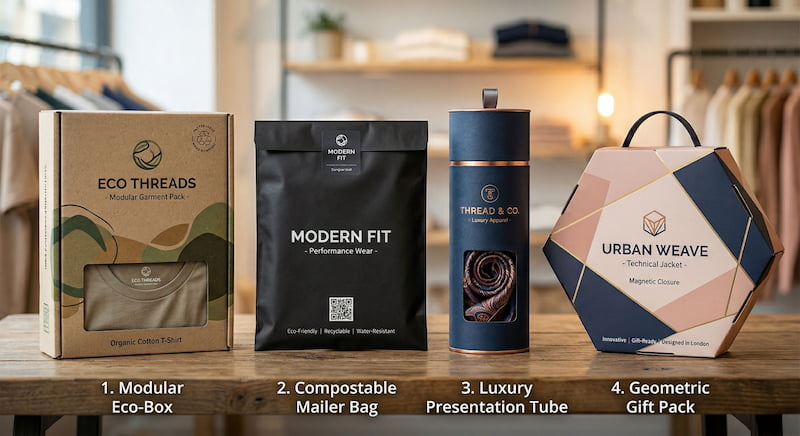
Rigid or semi-rigid boxes made from paperboard or corrugated cardboard are used for premium and luxury garment packaging. Often lined with tissue paper, foam, or velvet inserts, box packaging elevates the unboxing experience and is heavily used for gifting, limited-edition collections, footwear, lingerie, and DTC (direct-to-consumer) brands. Custom magnetic-closure boxes and drawer-style boxes are particularly popular in the luxury segment.
4. Flat-Pack & Vacuum Packaging
Vacuum-sealed flat packs remove air from the package, dramatically reducing volume and enabling more units per carton, critical for cost optimization in ocean freight. This format is widely used for knitwear, puffer jackets, and down-filled garments. However, garments must be re-steamed or aired out at the destination before retail display.
5. Garment Bags & Suit Covers
Long, opaque or transparent bags designed specifically for full-length garments like suits, evening gowns, coats, and bridal wear. Made from non-woven polypropylene, PEVA, or cotton, garment bags are durable, often reusable, and provide excellent protection. Premium versions include personalized monogramming, zipper closures, and cedar-infused linings for moth protection.
6. Sustainable & Eco-Packaging
A rapidly growing category driven by consumer pressure and regulatory mandates. Includes compostable mailer bags, recycled kraft paper packaging, seed paper hangtags, mushroom-fiber inserts, and water-soluble polybags. Leading brands such as Patagonia, Eileen Fisher, and Stella McCartney have committed to 100% sustainable packaging by 2026, signaling a major industry shift.
Garment Packaging Design: The Art of First Impressions
Packaging design is often underestimated in the apparel industry, yet studies show that 72% of consumers say packaging design influences their purchase decision and 40% share product photos on social media when packaging is distinctive. Here is what drives exceptional garment packaging design:
Brand Alignment
Every element of the packaging, colors, typography, logo placement, imagery, and tone of messaging, must align with the brand's identity. Luxury brands like Gucci or Burberry invest heavily in structured, minimalist boxes with premium finishes, while streetwear brands like Supreme use bold graphics and limited-palette designs that feel collectible. Consistency between packaging and brand aesthetic builds trust and recognition.
Typography & Color Psychology
Typeface and color are among the most powerful subliminal brand signals. Serif fonts communicate heritage and sophistication, while sans-serif fonts project modernity and accessibility. Color psychology is equally strategic: navy blue signals trust and authority, red evokes urgency and energy, green aligns with sustainability, and black conveys exclusivity. Understanding these associations allows brands to craft packaging that resonates emotionally with their target audience.
Printing Techniques & Surface Finishes
The visual and tactile quality of packaging is elevated through sophisticated printing and finishing techniques:
- Offset Printing: High-resolution, cost-effective for large print runs, the industry standard for boxes and bags.
- Digital Printing: Ideal for short runs, personalization, and variable data printing (names, custom messages).
- Foil Stamping: Metallic gold, silver, or holographic foil adds premium appeal, widely used in luxury and occasion wear.
- Embossing & Debossing: Creates 3D raised or recessed patterns on box surfaces for a tactile luxury experience.
- UV Spot Coating: Selective high-gloss finish over matte backgrounds highlights logos or design elements dramatically.
- Screen Printing: Often used for branded tissue paper, reusable shopping bags, and garment sleeves.
The Unboxing Experience
In the DTC and e-commerce era, the unboxing experience has become a critical touchpoint. Brands design multi-layered reveals, outer mailer box, branded tissue paper, ribbon or sticker seal, thank-you card, scent card, and finally the garment, to create a moment of delight. This choreography encourages social sharing, repeat purchases, and brand loyalty. Research by Dotcom Distribution found that 52% of consumers are more likely to make repeat purchases from brands with premium packaging.
Garment Packaging Materials
Material selection directly affects packaging cost, environmental footprint, protection performance, and brand perception. Below are the primary materials used across garment packaging types:
Polyethylene (PE) Films
LDPE (Low-Density Polyethylene) and HDPE (High-Density Polyethylene) are the backbone of polybag packaging. They offer excellent moisture resistance, clarity, and printability at low cost. However, they are derived from fossil fuels and are difficult to recycle through standard curbside programs, making them a growing sustainability concern. Bio-based PE (derived from sugarcane) and recycled-content PE films are increasingly adopted as drop-in sustainable alternatives.
Kraft Paper & Recycled Paperboard
Paper-based materials are experiencing a renaissance in garment packaging as brands pivot away from plastics. Kraft paper, natural brown or white, is used for mailer bags, wrapping paper, and hangtags. Recycled-content paperboard (SBS, CUK, or recycled boards) forms the substrate for box packaging. These materials are readily recyclable through standard waste streams and communicate environmental consciousness effectively.
Non-Woven Polypropylene (NWPP)
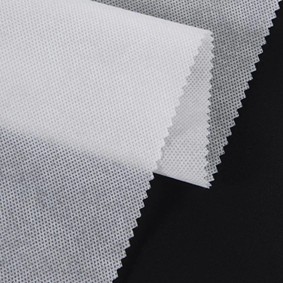
NWPP is widely used for reusable garment bags, tote bags, and dust bags. It is lightweight, tear-resistant, breathable, and can be produced in a wide range of colors and textures. Spun bond NWPP is the most common variant, offering good printability for brand graphics. Being reusable, NWPP bags offer a better long-term environmental trade-off than single-use plastic options.
Biodegradable & Compostable Films
PLA (Polylactic Acid), PBAT, and starch-blended films are certified compostable alternatives to traditional polybags. They look and feel similar to conventional plastic but break down in industrial composting conditions within 90 to 180 days. Brands like Allbirds and Girlfriend Collective have adopted these materials at scale. Important note: compostable films require industrial composting infrastructure; they do not break down effectively in home compost bins or oceans.
Organic Cotton & Fabric Pouches
High-end and sustainable brands use natural fabric pouches, organic cotton muslin, linen, or recycled cotton, as primary packaging for premium garments, accessories, and gifting products. These are reusable, biodegradable, and carry strong sustainability messaging. They also serve as a secondary product, the packaging itself becomes a storage pouch, extending its lifecycle and adding customer value.
Modernization of Garment Packaging: Technology & Trends
The garment packaging industry is undergoing rapid transformation driven by automation, digitalization, sustainability imperatives, and evolving consumer expectations. Here are the most significant modernization trends shaping its future
Automation & Robotics
Automated packaging lines now handle folding, bagging, labeling, carton erection, and palletizing with minimal human intervention. Collaborative robots (cobots) work alongside human operators for flexible, high-speed operations. Leading manufacturers such as Marchesini, FANUC, and BEUMER Group offer fully integrated garment packaging automation systems capable of processing 1,500+ units per hour. This reduces labor dependency, minimizes errors, and enables 24/7 operations.
RFID & Smart Packaging
Radio Frequency Identification (RFID) tags embedded in garment packaging enable real-time inventory visibility across the supply chain, from factory floor to retail store. RFID reduces shrinkage, enables automated check-in/check-out at distribution centers, and supports omnichannel fulfillment. QR codes printed on packaging link consumers to product authentication, care instructions, sustainability reports, and brand storytelling, transforming static packaging into an interactive digital touchpoint.
On-Demand & Digital Printing
Digital printing technology enables brands to produce short runs, seasonal collections, and fully personalized packaging without the setup costs of traditional plate-based printing. This is transforming DTC brands' ability to create hyper-personalized unboxing experiences at scale. Variable data printing (VDP) allows each package to carry a unique name, message, or design, previously impossible at the speed and economics required for apparel.
Sustainable Innovation
The industry is moving beyond material substitution to systemic redesign. Packaging-as-a-service models enable brands to use returnable, reusable shipping packaging (companies like Returnity and LimeLoop provide such systems). Mono-material packaging designs eliminate multi-layer laminates to improve recyclability. Thermal printing replaces ink-based label printing, reducing VOC emissions. Water-based inks and solvent-free adhesives are replacing conventional formulations across the board.
AI-Driven Packaging Optimization
Artificial intelligence is being applied to optimize carton dimensions, pack ratios, and material usage, reducing both costs and carbon footprint. AI-powered quality inspection systems use computer vision to detect defects and mislabeled packages at line speed. Predictive analytics help brands right-size packaging inventory, reducing overstock and waste. These capabilities are being integrated into packaging ERP modules and supply chain management platforms.
E-Commerce-Optimized Packaging (ISTA & ISTA 6-Amazon)
The explosion of e-commerce has necessitated packaging standards specifically designed for parcel delivery rather than store shelf display. Amazon's Frustration-Free Packaging (FFP) and Ships in Own Container (SIOC) programs require garment packaging to withstand automated sortation systems, reduce dimensional weight charges, and be curbside recyclable. ISTA 6-Amazon test protocols validate packaging against real-world e-commerce shipping stresses. Brands that adapt their packaging to these standards realize significant freight cost savings and reduced returns from transit damage.
Key Metrics & KPIs in Garment Packaging Operations
Packaging operations are measured against a robust set of KPIs to ensure efficiency, quality, and cost control:
- Packaging Cost per Unit (CPU): Total packaging material and labor cost divided by units produced.
- Defect Rate: Percentage of packages flagged during QC inspections (industry benchmark: below 0.5%).
- Carton Utilization Rate: Percentage of carton cubic volume occupied by product (target: 85%+).
- Packaging Cycle Time: Time from garment entry to carton sealing (measured in seconds/unit).
- Sustainability Score: Percentage of packaging materials that are recycled, recyclable, or certified sustainable.
- Return Rate from Transit Damage: Measures packaging effectiveness at protecting garments during shipping.
Packaging as a Strategic Asset
Garment packaging has evolved from a commodity function into a strategic business asset that affects brand perception, supply chain efficiency, sustainability performance, and customer loyalty. Brands that invest in understanding the full spectrum of packaging options, from process flow and material science to design aesthetics and digital innovation, gain a meaningful competitive edge in an increasingly crowded global apparel market.
As the industry moves toward 2026 and beyond, three imperatives will define packaging leadership: sustainability (reducing environmental impact through material innovation and circular design), digitalization (leveraging RFID, AI, and smart packaging to optimize operations), and experience design (creating unforgettable unboxing moments that turn customers into brand advocates).
Whether you are optimizing an existing packaging operation or designing a packaging strategy from scratch, the principles and practices outlined in this guide provide a comprehensive foundation. The future of garment packaging belongs to brands that see it not as a cost center, but as a canvas for storytelling, a lever for sustainability, and a driver of supply chain excellence.