





How modern counting systems are designed to handle diverse formats, maintain accuracy at speed, and support regulatory compliance
By: Frank Brown, President & CEO, Aylward Enterprises
The oral solid dose market is no longer defined by standard round tablets alone. Today's production floors handle capsules, oblong caplets, softgels, chewables, gummies, and a growing range of nutraceutical supplements. Each format introduces its own challenges related to shape, texture, fragility, coating, and flow characteristics. For equipment manufacturers and packaging engineers, this shift has required a rethinking of how bottle filling and counting systems are designed.
As product diversity expands across markets, packaging technology must deliver speed, accuracy, flexibility, and regulatory compliance without excessive changeover time or mechanical complexity. The engineering conversation has moved beyond throughput alone to incorporate adaptability and inspection integrity as equally central to line performance.
For equipment designers, that shift is most visible in how counting, inspection, data handling, and line integration are now treated as a single engineering problem rather than separate disciplines.
Designing for Shape Diversity Without Mechanical Complexity
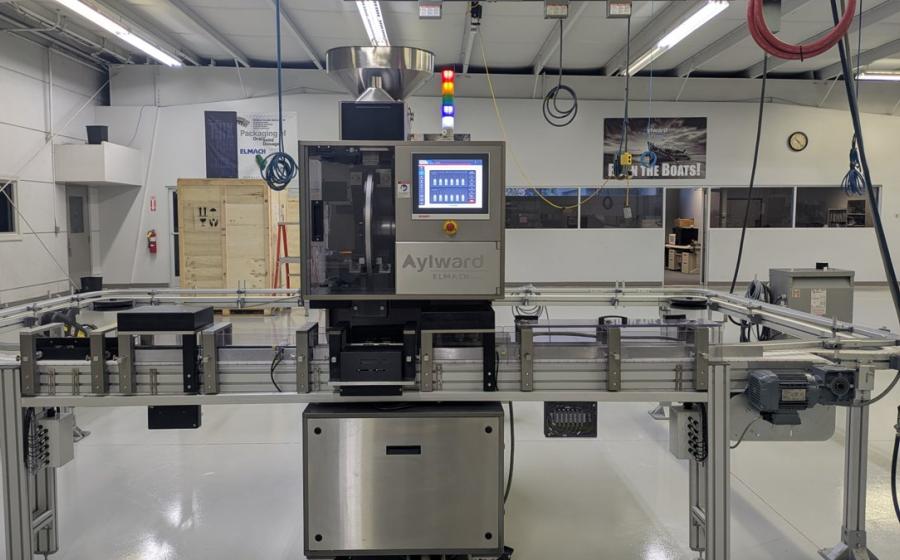
Walk onto a modern oral solid dose packaging floor and you will rarely see just one product moving down the line. A single facility may run round tablets in the morning, oblong caplets in the afternoon, and softgels or chewables by the end of the shift. Each product behaves differently. Some roll easily. Some stick. Some are fragile. All of them must be counted accurately and delivered to the bottle at speed. In practice, that has driven the development of compact, portable platforms such as the TCM bottle filler from Aylward, a leader in solid-dose pharmaceutical packaging machinery, which is engineered to run multiple solid dose formats on a single machine without the constant changeover burden that used to be accepted as inevitable.
Historically, bottle filling systems were built around the assumption of consistency. Dedicated counting disks and cavity tooling were engineered for a specific tablet geometry and optimized for long production runs of that single format. When the product stayed the same, performance was predictable. But as portfolios expanded and SKU counts grew, that rigidity became a constraint. Every new format could require mechanical change parts, adjustments, and downtime.
Today, equipment design is moving in a different direction. Instead of relying on tightly machined cavities built for one tablet profile, newer architectures use geometry-driven principles and vacuum-based handling to support a wider range of shapes and densities on the same platform. On Aylward's TCM, for example, a single vacuum disc design can be tuned via adjustable vacuum to reliably pick up light, low-density tablets and heavier or denser products, while a HEPA-protected vacuum path manages dust without degrading performance. By reducing dependence on product specific tooling and format-unique change parts, manufacturers gain the flexibility to transition between formats with far less disruption.
For contract packagers and consumer health brands in particular, this shift is critical. Product lifecycles are shorter. Lineups change frequently. Packaging equipment must respond just as quickly. Compact, portable machine platforms add another layer of agility, especially in facilities where floor space is limited and future reconfiguration is likely. The goal is no longer simply to fill bottles quickly; it is to do so with adaptability and format flexibility engineered into the platform from the start, so a change in product mix does not require a change in the entire filling line.
Maintaining Speed and Accuracy Across Variable Products
Running different solid dose products at high speed is not simply a matter of turning up the dial. Each format behaves differently once it leaves the hopper. A softgel can compress if handled too aggressively. A gummy may cling to neighboring pieces. A coated tablet can shed fine dust that interferes with sensors. Even subtle differences in weight or surface finish can change how product flows across a disk or through a feed channel. At elevated throughput, those small variables compound quickly. That is especially true for naturally variable formats such as softgels and gummies, where size and shape cannot be treated as fixed values but must be tolerated within defined limits.
Maintaining both speed and accuracy therefore requires more than mechanical counting. Systems must carefully control product flow, ensure proper singulation, and verify count before tablets ever reach the bottle. On Aylward platforms, patented vision inspection measures multiple parameters, such as size, shape, perimeter, and other geometric attributes, within milliseconds, using high-performance processing to distinguish normal product variability from true defects without sacrificing throughput. Inspection prior to bottle entry has become a critical checkpoint: by identifying and removing nonconforming units upstream, manufacturers reduce the risk of incorrect counts and prevent defective products from entering the container in the first place. The goal is not simply to detect errors, but to stop them before they move downstream.
Many modern platforms add another layer of protection through staged rejection strategies. Individual tablets can be removed before they drop into the bottle. If a discrepancy is detected after filling, the entire bottle can be diverted for review. This layered approach creates redundancy within the process, reinforcing the central objective: no nonconforming product should reach the accepted stream. In practical terms, the objective is straightforward: no bad tablets in a good bottle, and no bad bottles in the accepted product stream.
Even the seemingly simple act of bottle handling plays a decisive role at higher speeds. When upgrading or replacing legacy fillers, the most significant challenges are often physical rather than digital. Footprint constraints, conveyor geometry, and bottle pitch alignment must all be preserved to maintain smooth integration with upstream and downstream equipment. Feed-screw based bottle handling, capable of managing round, square, and oval containers, helps new fillers marry up cleanly to existing infeed and discharge conveyors, which is often the most challenging part of a retrofit. In high speed environments, precision in positioning is just as important as precision in counting.
Compliance, Traceability, and Data Integrity
Pharmaceutical and supplement packaging does not operate in a vacuum. Every bottle that leaves the line carries not only product, but proof. Proof that it was counted correctly. Proof that it was inspected. Proof that the data behind it can stand up to scrutiny. In a regulated environment, traceability, documentation, and data integrity are not secondary considerations. They are inseparable from production itself.
That means bottle filling equipment can no longer function as a purely mechanical device. It must also serve as a data generating asset. Modern systems exchange signals with plant-level control environments, capturing inspection results and operational performance in real time. Those signals feed line monitoring platforms, support production reporting, and create the digital record required for audit readiness. In many cases, including Aylward's bottle fillers, that record is built on industrial SQL databases at the machine level, capturing batch information, user interactions on the HMI, inspection results, and alarms in a way that can be reported locally or passed to higher level systems. In other words, every count must be traceable, and every inspection must be defensible.
Inspection before bottle entry adds another layer of protection. By verifying product prior to containerization, manufacturers reduce the risk of downstream rework and simplify quality validation. Integrated rejection systems prevent nonconforming units from merging with accepted product, protecting both compliance and brand reputation. Optional PDF reports, along with connections to line execution and manufacturing execution systems for recipe integration and report backup, further strengthen the traceability story without adding unnecessary complexity for operators.
As regulatory expectations continue to evolve globally, precision alone is no longer enough. The industry is moving toward systems where transparency is built into the architecture. Accuracy must be measurable. Inspection must be documented. Data must be reliable. From an engineering standpoint, that means treating data capture, storage, and presentation as core requirements of the filler's architecture, not as bolt-on features to be addressed late in a project. The equipment itself becomes part of the compliance strategy, not just a contributor to throughput.
Integration as the New Standard: Where Precision Meets Adaptability
A bottle filler does not operate alone. It lives in the middle of motion. Upstream, product is fed, inspected, and prepared. Downstream, bottles are capped, labeled, cartoned, and case packed. Every transition matters. Every signal must align. In modern oral solid dose packaging, integration is not an afterthought. It is central to performance.
Mechanical compatibility is the first layer. Equipment must fit existing footprints, align with conveyor geometry, and preserve bottle pitch and height without forcing a full line redesign. Compact platforms reduce disruption during upgrades and allow legacy systems to be replaced without rebuilding the room. Simplified interfaces shorten commissioning timelines and reduce validation burden, getting production back online faster. Where an older filler is being replaced on an existing line, keeping the bottle handling envelope consistent, including pitch, height, and transfer points, often determines whether the upgrade feels plug-and-play or becomes a full mechanical redesign.
But physical alignment is only half the equation. Machines must also communicate seamlessly. Start and stop commands, fault notifications, inspection results, and production data flow continuously across the line. Standardized communication protocols enable bottle fillers to function as interoperable modules rather than isolated machines. Interfaces to line execution systems and plant-wide data environments ensure that start/stop logic, quality decisions, and production reporting remain synchronized, even as products, formats, and recipes change over time. Across the industry, the shift is clear: packaging equipment must integrate mechanically and digitally from day one, supporting scalability as product portfolios expand.
Within this environment, adaptability becomes the defining metric. Manufacturers are running more SKUs, introducing new formats more frequently, and balancing throughput demands with regulatory oversight. Flexibility cannot compromise speed, and speed cannot compromise compliance. Equipment must deliver both on the same footprint, under the same data and validation constraints, if it is going to remain viable over the life of a line.
Aylward's bottle filling platforms reflect this convergence. Compact, portable designs and geometry-driven counting architectures, exemplified by the TCM bottle filler, are built around a simple promise: handle virtually any solid dose shape or format on a single platform without sacrificing accuracy. Inspection prior to bottle entry and layered rejection strategies support that promise, ensuring that defective tablets are removed individually where possible and that suspect bottles are diverted before they reach the accepted stream. In some applications, Aylward has coupled its bottle fillers with dedicated blister feeders, robotics, and camera-based inspection to manage challenging products that other suppliers were reluctant to take on. Integration with feeder technology, cartoning systems, and plant-level data environments allows the equipment to operate as part of a cohesive packaging architecture rather than a standalone machine. For manufacturers managing diverse pharmaceutical and supplement portfolios, this level of integration supports both operational efficiency and regulatory assurance.
Oral solid dose products remain foundational across prescription, over the counter, and consumer health markets. Even as delivery formats evolve, tablets and capsules continue to dominate packaging volumes. The future of bottle filling will be defined by compact systems, geometry-based versatility, embedded inspection, and transparent data flow. In an increasingly diversified production landscape, precision must travel with adaptability.
For packaging engineers and operations leaders, the mandate is straightforward: integrate seamlessly, adapt quickly, and protect product integrity without slowing the line or overburdening validation and quality teams. The equipment that succeeds will not simply count tablets accurately. It will connect, communicate, and perform as part of a unified system. That is where the next phase of oral solid dose packaging is heading.