




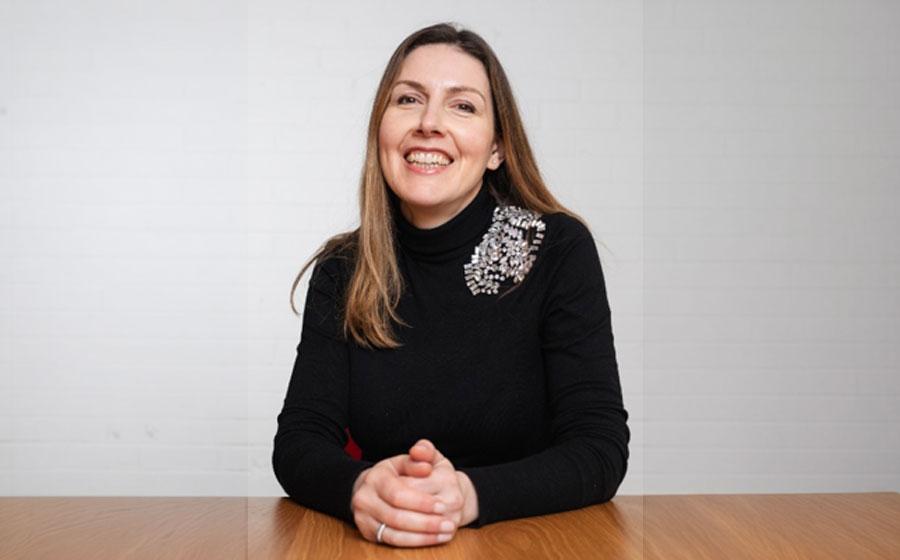
Name: Claudia Campani
Designation: Packaging & Special Projects Lead
Organization: Mecca Brands
Questions
I began my journey in the beauty industry in Italy more than twenty years ago. As a Product Manager, I was responsible for the development of both formulations and packaging. Cosmetic ingredients were certainly fascinating, however it was packaging that truly captured my interest from the get go. I was responsible for all the limited edition seasonal colour cosmetic collections for KIKO Milano for several years, before moving to Australia in 2011.
After moving to Australia, I continued my career in product development, creating private-label makeup and skincare products for pharmacies and major retail brands. This experience further strengthened my understanding of the end-to-end development process and deepened my appreciation for the critical role packaging plays in delivering a successful product to market.
Eventually, I chose to focus exclusively on packaging development, turning my passion into a specialised career.
The packaging development process is all about balancing aesthetics, functionality, sustainability, consumer experience, and technical requirements. It is a complex puzzle that I still genuinely enjoy solving over twenty years on! On the back of my mind I always bear the fact that the beauty industry is very resource-intensive, which makes sustainability one of the most significant challenges we face today. I always welcome any progress that helps reduce the environmental impact of beauty packaging, whether through improved recyclability, increased use of post-consumer recycled materials, refillable systems, or the development of viable compostable solutions. I believe the upcoming Packaging and Packaging Waste Regulation (PPWR) in Europe will be a major turning point and catalyst for change, not only within Europe but across the global packaging industry. Its requirements will reshape the way packaging is designed, manufactured, and assessed, and suppliers will need to be prepared to adapt quickly and invest in new capabilities and technologies.
Brands and retailers have the responsibility to comply with the regulations but also to do better than the regulations, when possible. Transparency is playing an increasingly important role in brand and packaging design: younger generations of consumers want to understand where materials come from, how products are manufactured, and whether sustainability claims are genuinely supported by evidence. In the future, packaging will need to do more than look beautiful: it will need to communicate authenticity, traceability, and trust.
What excites me most is the opportunity to help shape the future of sustainable beauty packaging. I believe the next decade will bring significant change to our industry, and I am excited to be part of this transformation. The change I have already witnessed throughout the span of my career is impressive, and its speed is only destined to increase.
When I approach a new project, my guiding principles are aesthetics, functionality, and logistics. Logistics are especially important for Australian companies, where shipping can add months to already lengthy lead times. Cost is also always a consideration, but it is often a consequence of the choices made around the first three.
The rise of AI has accelerated the speed at which packaging suppliers can move. AI is an opportunity for packaging suppliers to focus on the right innovation, get their clients’ buy in faster, derisk their new tooling investments. They can identify emerging trends more quickly, and focus resources on concepts with the greatest potential for success. Renderings are now fast, precise and cheap, and everything moves faster and faster.
Looking ahead, I think one of the biggest challenges for beauty brands will be maintaining design differentiation in an increasingly saturated market. As regulations and sustainability targets reduce the use of certain packaging materials and embellishments, brands will need to find new ways to create cut through and communicate their identity in a way that is not bland. This will require thoughtful design, innovation, consumer experience, and storytelling, rather than relying solely on decorative packaging elements to stand out on shelf.
Sometimes the answer is different from the brand’s and the customer’s perspective. For example, creating a mono-material pump that doesn’t have a metal spring and can then be recycled was a huge innovation milestone, but the true testament to its success was that the customers did not perceive a difference in their user experience.
Something like smart packaging has an impact for both parties: brands have more chances to communicate, and customers benefit from information that is always accurate and up to date.
I believe that the change that the beauty packaging will see over the next five years will be greater than the last twenty years. The push will come from the regulatory bodies, but the pull will come from customers. The new generations are not afraid of using their buying power to support brands that align with their values, and boycott the ones that don’t. Also, technologically I am very excited to see what further progress will be made with compostable and sustainable materials that don’t rely on fossil fuel based plastics.
Given that the beauty industry spends the vast majority of its R&D budget on ingredients rather than packaging, I find that PackagingConnections.com very helpful as a great resource to cross pollinate packaging innovation from other industries.
The use of AI opens up efficiency opportunities for any industry, and packaging is no different. We’ve already touched on design – this is for example something I have started using myself quite often. And not because I think that my quick renderings with AI will replace the work of our amazing designers, but because an image often makes communication with internal stakeholders and vendors a lot easier and faster, saving time on every project. Especially in the beauty industry, being able to see something finished is very powerful.
Production and supply chain are also made more efficient by the use of data analytics: companies could use AI driven forecasts to avoid shortages and prevents overstocks for example. Everything that makes staff concentrate on what really moves the needle and leaves the menial and repetitive tasks to AI is very welcome progress in my opinion.
Technology is making the future of beauty packaging very exciting. We could be able to know for example if the storage conditions of a heat sensitive product have been met throughout its shelf life, where a product was filled, or if a sunscreen is still within its best use by date. Companies will have to lean more and more into transparency, and that will be a very welcome change from the younger generations.
Sustainability is something that is very close to my heart, so I think about it very often. It's a topic I come back to constantly. Ultimately, it will come down to a combination of regulation changes and customers mindset shift.
Australia is running behind Europe when it comes to packaging regulations and EPR and unfortunately having to rely on voluntary guidance rather than enforceable standards only widens that gap. The market is currently not a level playing field. Infrastructure is also a very important driver, as what counts as "sustainable" is only as good as the system built to support it. For example, there is a lot of movement in plastic free and industrially compostable packaging, which I love, but since this is not a recognized standard in Australia the uptake has been quite limited.
Packaging is the consumer's first interaction with a product, and it has the responsibility to convey the brand identity, create emotional connections, and eventually make or break a product's success. In future, packaging is heading from a more basic and functional role to something more dynamic: there could be small digitally printed customized runs, moments of theatre during a DTC unboxing experience, QR codes that show the usage instructions or the carbon footprint of the product. Possibilities are endless and the successful brands will find ways to emotionally connect with the customer in a way that goes beyond just the physical product.
I think that beauty’s biggest opportunity lies in really leaning into technology enhanced packaging, as its price point could often make these options a possibility. For example, QR codes can link to shade-matching tools, skin diagnostics, refill instructions, or authenticity verification. Packaging manufacturers could enter into partnership with app developers and AI skin-analysis platforms, making packing the entry point into a personalized digital skincare/beauty journey, not just a container.
I don't think AI and automation change the fundamentals of a packaging development role. Packaging in the beauty industry is, and will remain, primarily a game of technical competence (on materials, finishes, custom tooling, formulation compatibility, regulatory compliance) combined with business savviness on sourcing, cost, and logistics, with a touch of creativity. My advice to anyone entering this career: get genuinely curious about both materials science and regulation, because that intersection is where the next decade of innovation will happen. And always put the customer at the centre of every decision; beautifully designed packaging means nothing if the customer won't actually use it.
I've been lucky to have several mentors across my professional journey. My first manager taught me the beauty industry inside and out, and modelled something I still carry with me every day: always have your team's back, in every situation. I also owe a huge amount of my professional knowledge to my vendors: as a product manager, you're a generalist, while each vendor is a specialist in their own product. Approach every vendor conversation with humility and curiosity, and you'll add a new layer of technical expertise from every single project.
Every day is different, and every project is a new challenge: that's what I love about product management in the beauty industry, and the reason I'm still not tired of it twenty years on. I always start by checking my priorities for the day and the week, assessing what absolutely needs to happen promptly to avoid delays, identifying where the bottlenecks are and in what meeting I can address them. Having a project management tool is helpful, but I still love keeping a to-do list on paper that I follow religiously.
I don't know if it is a productivity hack, but I often run through a project in my head to make sure everything is solid. I also enjoy exercising a few times a week after work, to better mark the separation between work time and personal time and allow a clearer head.
Whenever I need a boost of inspiration, I'll wander through a beauty store, not to look at the shelves but to listen. I watch how customers pick up a product, turn it over, ask a question and check what draws their attention. It's a small ritual, but it never fails to remind me that all the technical work I do is really to create the perfect customer experience.