



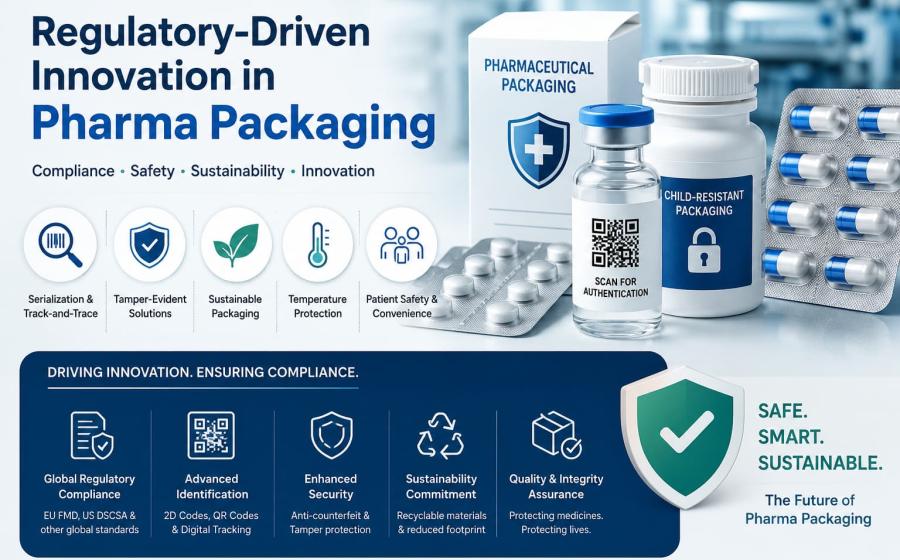

The pharmaceutical packaging industry is undergoing a major transformation as global regulations become stricter and more focused on patient safety, sustainability, traceability, and product integrity. Today, pharmaceutical packaging is no longer just about protecting medicines — it has become a critical part of regulatory compliance and brand responsibility.
From serialization requirements to sustainable packaging mandates, regulatory changes are driving innovation across the pharma packaging sector.
Why Regulations Matter in Pharmaceutical Packaging
Pharmaceutical products directly impact human health, making packaging compliance extremely important. Regulatory authorities worldwide are introducing stricter standards to ensure:
- Patient safety
- Product authenticity
- Tamper protection
- Traceability
- Environmental sustainability
- Proper labeling and information accuracy
As a result, pharmaceutical companies and packaging manufacturers must continuously innovate to stay compliant while maintaining operational efficiency.
Key Regulatory Drivers Shaping Pharma Packaging
1. Serialization and Track-and-Trace Requirements
One of the biggest changes in pharmaceutical packaging has been the introduction of serialization systems.
Regulations such as:
- EU Falsified Medicines Directive (FMD)
- US Drug Supply Chain Security Act (DSCSA)
require unique identification codes on pharmaceutical products to combat counterfeit medicines.
This has led to innovations such as:
- QR codes and 2D barcodes
- Smart labeling systems
- Digital tracking platforms
- Automated inspection systems
Serialization has significantly improved supply chain transparency and product authentication.
2. Tamper-Evident Packaging Innovations
Regulatory authorities now require pharmaceutical packaging to clearly show evidence of tampering.
This has increased the use of:
- Induction seals
- Tear strips
- Breakable caps
- Security labels
- Holographic authentication features
Tamper-evident solutions help improve consumer trust and product safety.
3. Sustainability Regulations Driving Packaging Redesign
Environmental regulations are pushing pharmaceutical companies toward more sustainable packaging solutions.
Governments and regulatory bodies are encouraging:
- Reduction of plastic waste
- Recyclable packaging materials
- Lower carbon footprint packaging
- Reduced packaging weight
As a result, pharma companies are increasingly adopting:
- Mono-material flexible packaging
- Recyclable blister packaging
- Paper-based solutions
- Lightweight laminates
Sustainability is now becoming a core part of pharmaceutical packaging development.
4. Child-Resistant and Senior-Friendly Packaging
Regulatory standards require certain medicines to use child-resistant packaging while still remaining accessible for elderly patients.
This challenge has encouraged innovation in:
- Push-and-turn closures
- Senior-friendly blister packs
- Unit-dose packaging
- Ergonomic packaging designs
Balancing safety with convenience remains a major focus area.
5. Temperature-Controlled Packaging
The growth of biologics, vaccines, and specialty medicines has increased the demand for temperature-sensitive pharmaceutical packaging.
Regulations now require strict temperature monitoring and stability control during transportation and storage.
Innovations include:
- Insulated packaging systems
- Smart temperature indicators
- Cold-chain monitoring sensors
- Advanced barrier films
These solutions help maintain product effectiveness throughout the supply chain.
The Rise of Smart Pharmaceutical Packaging
Regulations and patient engagement needs are accelerating the adoption of smart packaging technologies.
Modern pharma packaging now includes:
- NFC-enabled packaging
- QR-code-based patient information
- Digital dosage tracking
- Anti-counterfeit technologies
- Connected packaging systems
Smart packaging improves patient compliance and enhances supply chain visibility.
Challenges Faced by Packaging Manufacturers
While regulatory-driven innovation creates opportunities, it also presents several challenges:
- Higher compliance costs
- Frequent regulatory updates
- Complex global standards
- Increased documentation requirements
- Validation and testing demands
Packaging suppliers must remain agile and continuously invest in technology and compliance systems.
Future Trends in Pharma Packaging
The future of pharmaceutical packaging will focus on:
- Sustainable and recyclable packaging
- Smart and connected packaging
- AI-driven quality inspection
- Digital printing for variable data
- Advanced barrier materials
- Fully traceable packaging ecosystems
Regulations will continue to shape packaging innovation and industry standards worldwide.
Regulatory requirements are transforming pharmaceutical packaging from a basic protective layer into a highly advanced, intelligent, and sustainable solution.
Companies that invest in innovation, compliance, and sustainable packaging technologies will be better positioned to meet future industry demands while improving patient safety and operational efficiency.
As global regulations continue to evolve, regulatory-driven innovation will remain one of the most important forces shaping the future of pharmaceutical packaging.