



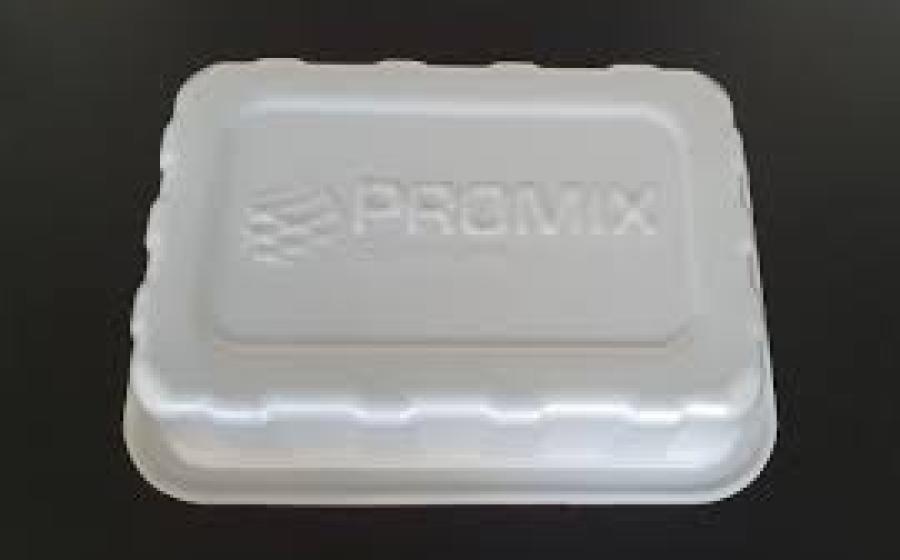

Promix Solutions AG’s Microcell technology is making waves in the packaging industry by reducing material use, improving recyclability, and cutting costs. This eco-friendly solution aligns with the European Packaging Regulation, and offers significant benefits for manufacturers and the environment.
The packaging industry is undergoing a shift as manufacturers face more pressure to conserve resources, reduce raw material use, and meet stringent regulatory requirements. Switzerland-based Promix Solutions AG has introduced Microcell technology, a solution that addresses these challenges while maintaining performance, functionality, and recyclability.
With the European Packaging Regulation (PPWR) set to take effect in 2030, only fully recyclable packaging will be allowed on the market. Additionally, ambitious targets for the use of recycled materials are driving innovation in the sector. Microcell technology, developed by Promix Solutions AG, offers an economically and ecologically compelling solution to meet these demands.
“Microcell technology typically reduces packaging weight by around 20%, fully preserves mechanical properties, and enables true recyclability,” said a Promix spokesperson.
Lighter packaging, same performance, tangible savings
Microcell technology incorporates environmentally neutral gases, such as CO₂ or N₂, into plastic, creating a fine-pored, microcellular foam structure. This structure ensures that packaging, such as cups or trays, achieves the same stability as conventionally manufactured products, even after thermoforming, despite significantly reduced density.
A typical extrusion line for packaging film with an output of 800 kg/h can save up to 3.8 tons of plastic daily using Microcell technology. This translates to approximately €3,800 ($4,444) per day or over €80,000 ($93,557) per month. Over a year, this results in a reduction of around 1,000 tons of plastic per line.
The benefits extend beyond material savings. The lower film weight reduces energy consumption during thermoforming and transport weight, leading to an improved carbon footprint. The technology is compatible with virtually all polymers and can be seamlessly integrated into both existing and new systems.
Environmentally friendly and fully recyclable
Microcell technology uses environmentally neutral blowing agents and avoids harmful additives, ensuring that packaging remains fully recyclable. Even production residues generated during thermoforming can be easily recycled, as the additive does not accumulate in the material like chemical blowing agents.
The technology is suitable for a wide range of packaging applications, including food packaging, technical packaging, and form-fill-seal (FFS) applications.
Microcell provides a reduction in material without compromising shelf life or product protection. Image courtesy of Promix Solutions AG
For yogurt cups, often produced using the FFS process, Microcell enables a 20% to 25% reduction in material without compromising shelf life or product protection. While polystyrene is traditionally used, polypropylene and polyester are becoming increasingly important.
“In a 3-layer PP clamshell tray, the Microcell core layer forms the heart of the design. Sandwiched between two solid outer layers, it significantly improves insulation and withstands temperatures of up to 100 °C,” explained a Promix representative.
The foam structure reduces material density by 40% in this example, without compromising durability. Microcell PP is a sustainable alternative to polystyrene or paper-coated solutions. As a mono-material, it fully complies with the requirements of the PPWR, and is fully recyclable.
Environmentally friendly, economical, future-proof
Microcell technology combines ecological benefits with economic efficiency. By using environmentally neutral blowing agents, achieving significant material savings, and ensuring full recyclability, the technology paves the way for sustainable, cost-effective, and regulatory-compliant packaging solutions.
“Microcell combines ecological benefits with economic efficiency. Through the use of environmentally neutral blowing agents, significant material savings, and full recyclability, the technology paves the way for sustainable, cost-effective, and regulatory-compliant packaging solutions — today and in the future,” said a Promix spokesperson.
Promix Microcell Technology works for all types of extrusion processes including cables, packaging, films, sheets and boards, pipes and profiles, blown film and extrusion blow molding as well as thermoforming. The company said its technology can be retrofited to existing extrusion lines as well as installed in new lines.