




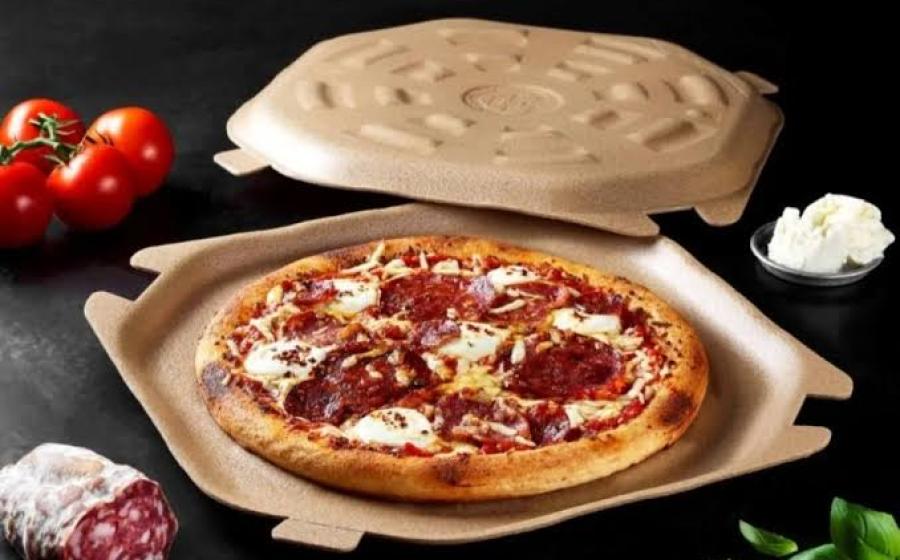

Klöckner Pentaplast launches a recyclable EPP pizza box designed to keep deliveries hotter while supporting takeaway and dine-in service.
New pizza packaging combines delivery performance with dine-in presentation
Klöckner Pentaplast has launched kp Infinity Tavola, a recyclable packaging format designed to keep pizzas hotter during delivery while also allowing the same pack to be used for dine-in service and presentation.
The solution uses two identical interlocking components that combine to create a secure lidded container for takeaway and delivery. When opened, the format can also function as a presentation tray for customers eating on site.
The design targets quick-service restaurants, pizzerias and delivery-led food businesses looking to combine thermal performance, packaging efficiency and a more consistent customer experience.
EPP structure improves thermal performance
kp Infinity Tavola is manufactured from expanded polypropylene, a lightweight material with insulating properties that can help retain heat during transportation.
Comparative testing reported by kp found that pizzas packaged in the new format remained up to 7.3°C hotter than conventional alternatives after five minutes.
The temperature advantage was also maintained after longer periods, with the packaging continuing to provide improved thermal retention after one hour.
Non-absorbent material protects the packaging
Traditional cardboard pizza boxes can absorb oil, grease and moisture released by the food during transport and consumption.
This can weaken the structure, create leakage and complicate recycling because food contamination may reduce the quality of recovered fibre.
The EPP structure used in kp Infinity Tavola is non-absorbent, preventing oils and food residues from penetrating the packaging material.
Recyclability is built into the material choice
The packaging has been designed for recycling within appropriate polypropylene collection and recycling streams.
Because the structure does not rely on a fibre substrate that becomes heavily contaminated with food residue, the pack can avoid some of the end-of-life challenges associated with conventional pizza boxes.
Actual recycling performance will nevertheless depend on the collection and processing infrastructure available in each market.
One format supports multiple foodservice occasions
A key feature of the new design is its ability to serve different stages of the foodservice journey.
The interlocking components create a secure container for delivery, while opening the pack transforms it into a presentation format suitable for dine-in consumption.
This reduces the need for separate packaging formats for delivery and restaurant service and allows operators to use the same system across different sales channels.
Flat-packed format reduces operational complexity
The boxes arrive flat and do not require complex assembly, helping foodservice operators manage storage and preparation more efficiently.
The interlocking structure also eliminates the need for additional fastening components, allowing the packaging to be assembled quickly when an order is prepared.
For high-volume pizza operations, reducing preparation time and storage requirements can be as important as the environmental characteristics of the packaging itself.
Packaging becomes part of the customer experience
The clean exterior and contemporary appearance of kp Infinity Tavola are designed to work in premium foodservice environments as well as conventional delivery operations.
This reflects a broader shift in foodservice packaging, where the package increasingly needs to perform both as a protective transport system and as part of the presentation experienced by the customer.
For restaurants operating across dine-in, collection and delivery channels, a single format can provide greater visual and operational consistency.
Packaging design balances performance and circularity
The development illustrates how foodservice packaging can be redesigned around the complete use case rather than focusing on a single sustainability attribute.
Thermal insulation, protection against grease, structural strength, storage efficiency and recyclability all influence the performance of a pizza delivery package.
By combining these functions within an expanded polypropylene structure, kp is targeting a packaging format designed around the practical requirements of modern foodservice operations.
Pizza packaging enters a new phase of functional design
The launch demonstrates that alternatives to conventional pizza boxes do not necessarily have to replicate the same fibre-based structure.
Instead, new packaging formats can use different material properties to solve specific problems such as heat retention, contamination and multi-channel foodservice use.
As delivery continues to represent an important part of restaurant sales, packaging will increasingly be expected to protect food quality while supporting operational efficiency and more circular material systems.