





A new technical guide examines carton failure points, load direction and the role of reinforced tape in long-distance shipping
A carton can leave the packing line looking perfectly secure and still arrive with an opened seam, torn corner or distorted sidewall. Export shipments add repeated handling, warehouse stacking, forklift movement, vehicle acceleration and braking, and long periods of compression that are difficult to reproduce at the packing station.
River Tape has published a technical guide looking at where filament tape can add useful reinforcement to export cartons and palletized loads—and where the packaging system itself deserves closer attention.
The starting point is not tape strength. It is the location and type of failure.
A seam that begins to open during handling presents a different problem from a bottom flap carrying excessive load. Damage around a hand hole or carton corner involves another stress pattern altogether. If the whole pallet is moving, reinforcing one carton with a stronger tape may have little effect on overall load stability.
This distinction matters because filament tape is sometimes treated as a universal “stronger packing tape.” Its role is more specific. Glass-fiber reinforcement and relatively low stretch can add restraint at selected weak points, but they cannot compensate for inadequate board grade, unsuitable box construction or a poorly designed pallet pattern.
“Before increasing tape strength, it helps to see where the package actually starts to fail,” said Jarod Tu of River Tape. “A seam opening, a corner tearing and a pallet moving in transit are different problems. The reinforcement should match the load path rather than simply use the strongest tape available.”
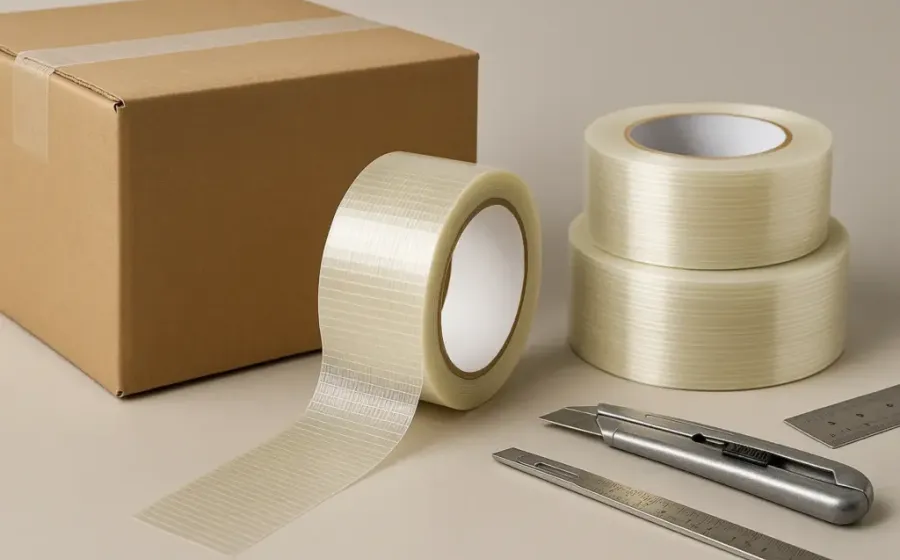
Construction also affects how reinforcement is applied. Mono filament tape carries most of its reinforcement along the tape direction, making it a practical option where the main load is directional, such as selected seam or flap reinforcement. Cross filament tape reinforces in both directions and can be considered where support is needed across more than one direction, including corners, openings and other localized weak areas.
Palletized freight introduces another boundary. Reinforced tape may help with carton stabilization or selected unitizing tasks, but it should not automatically be treated as a replacement for stretch film, strapping or appropriate pallet design. Load weight, carton strength, stacking geometry and the expected handling route still need to be considered together.
The full article, “Filament Tape for Export Packaging: Carton & Pallet Reinforcement,” explains how to identify common failure points and choose reinforcement based on the packaging problem rather than tensile strength alone.
https://rivertape.com/filament-tape-for-export-packaging-carton-pallet-reinforcement/
About River Tape
River Tape supplies industrial adhesive tapes for packaging reinforcement, transport securing, bundling and other manufacturing applications. Its packaging range includes mono filament and cross filament tapes for carton reinforcement and industrial shipping applications.