




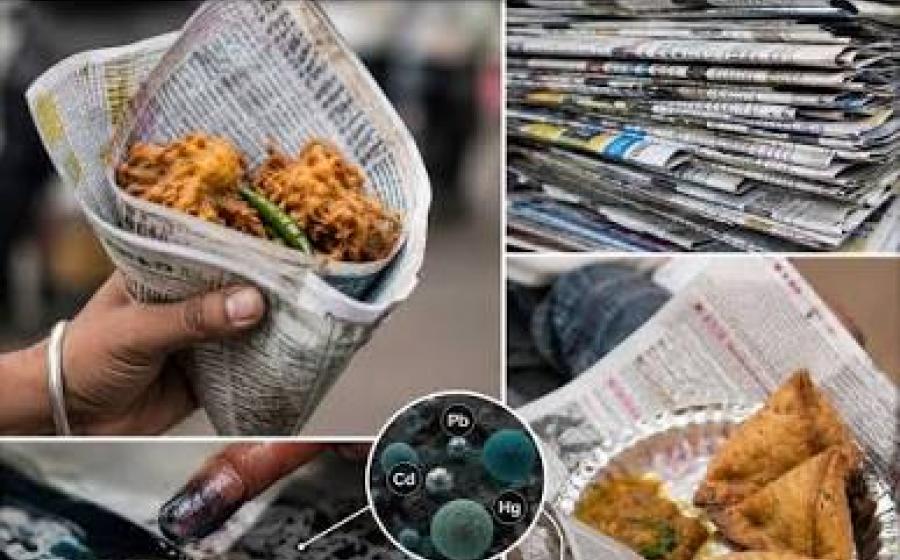

The Food Safety and Standards Authority of India (FSSAI) has once again cautioned food business operators against using newspapers for packing, wrapping, or serving food, citing serious food safety and public health concerns. The renewed advisory follows enforcement actions against vendors found using newspapers for food packaging despite existing regulations prohibiting the practice.
According to FSSAI, newspaper printing inks may contain harmful substances such as lead, heavy metals, pigments, binders, and other chemicals that can migrate into food products. This risk becomes even greater when hot, oily, or moist foods come into direct contact with printed surfaces. In addition, newspapers are often exposed to dust, dirt, and unhygienic handling during printing, transportation, and distribution, increasing the potential for food contamination.
The regulator has reminded food businesses that the Food Safety and Standards (Packaging) Regulations, 2018, prohibit the use of newspapers and other non-food-grade printed materials for storing, wrapping, packaging, or serving food. The directive applies to street food vendors, restaurants, cloud kitchens, caterers, quick-service restaurants, retailers, and mobile food operators.
FSSAI has urged businesses to adopt approved food-grade packaging materials to ensure consumer safety and regulatory compliance. Consumers have also been encouraged to avoid purchasing food items served in newspapers and to support safer packaging practices.
PackagingConnections Insight:
The renewed warning highlights the critical role packaging plays in food safety. While newspapers have traditionally been used as a low-cost packaging solution, increasing awareness of chemical migration and contamination risks is driving the shift toward certified food-grade papers, recyclable wraps, molded fiber packs, and sustainable barrier-coated packaging materials. For packaging manufacturers and food brands, this serves as a reminder that packaging must not only be sustainable and cost-effective but also fully compliant with food-contact safety regulations.