




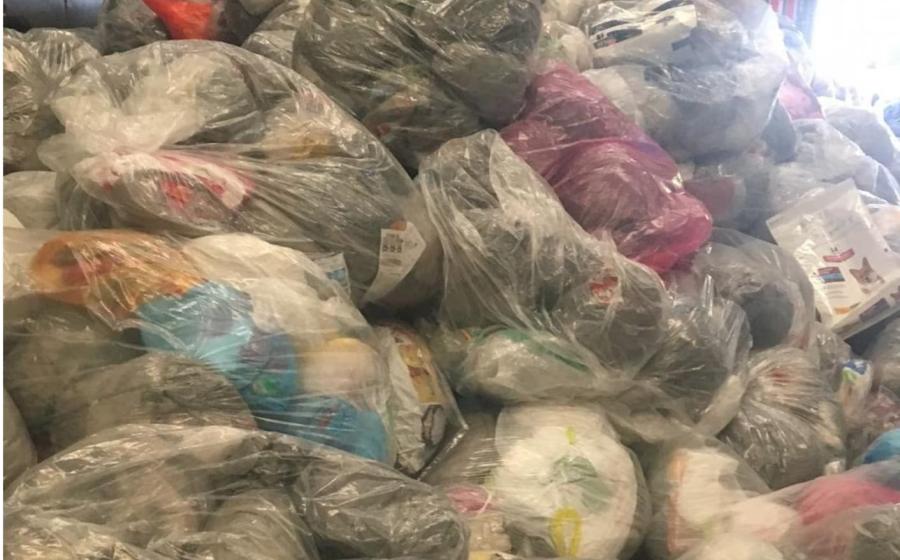

A new industry report has warned that Australia’s plastic recycling system is approaching collapse unless the federal government urgently mandates minimum recycled-content requirements for plastic packaging.
The report, Serving Australia’s Plastic Future, released by the Australian Council of Recycling (ACOR) and the Australian Packaging Covenant Organisation (APCO), highlights the growing impact of cheap imported virgin plastic flooding the Australian market and undermining domestic recycling demand.
Plastic Waste Outpacing Recycling Capacity
Australians use approximately 1.3 million tonnes of plastic packaging each year, yet nearly one million tonnes—much of it imported—ends up as litter or landfill. This volume is equivalent to around 100,000 garbage trucks filled with plastic annually.
According to the report, the problem is structural: manufacturers are not legally required to include recycled content in packaging, leaving recyclers without sufficient end-market demand for recovered plastics.
“The vast majority of Australia’s annual plastic waste goes to landfill, where it persists almost indefinitely,” the report states.
“Unlike organic waste, plastic occupies landfill capacity forever—and every Australian capital city now faces landfill strain or failure.”
National Targets Falling Short
Australia’s National Packaging Targets, introduced in 2018, aimed for 70% of plastic packaging to be recycled or composted. Nearly a decade later, only 19% of plastic packaging is being recovered, according to the report.
Without regulatory intervention, recovery rates could decline even further.
ACOR Chief Executive Suzanne Toumbourou warned that Australia risks following Europe’s trajectory, where over one million tonnes of plastic recycling capacity has been lost in recent years due to weak demand for recycled materials.
“Without reform, we could see recycling facilities shutter and even less plastic recycled over time,” she said.
Global Pressures, Local Consequences
The report also points to global market dynamics intensifying the crisis. In the United States, reduced fossil fuel demand has enabled petrochemical companies to produce more virgin plastic at lower cost, further depressing recycled material markets worldwide.
If Australia fails to act, demand for recycled plastics could fall to just 32% by 2031, leading to facility closures, job losses, and environmental costs estimated at $32 billion by 2050.
Government Action Still Pending
The Australian Government, led by Anthony Albanese, agreed in 2023 to develop nationwide mandatory packaging design rules, including recycled-content standards. However, legislation has yet to be introduced.
“The Australian Government must urgently deliver packaging reform to secure the future viability of the domestic plastic recycling industry,” Ms Toumbourou said.
“This is essential to ensure plastic is remade into new products and that Australians’ recycling efforts are not wasted.”
APCO Chief Executive Chris Foley echoed the call, emphasizing that strong domestic demand for recycled packagingis critical to achieving Australia’s circular economy goals.