





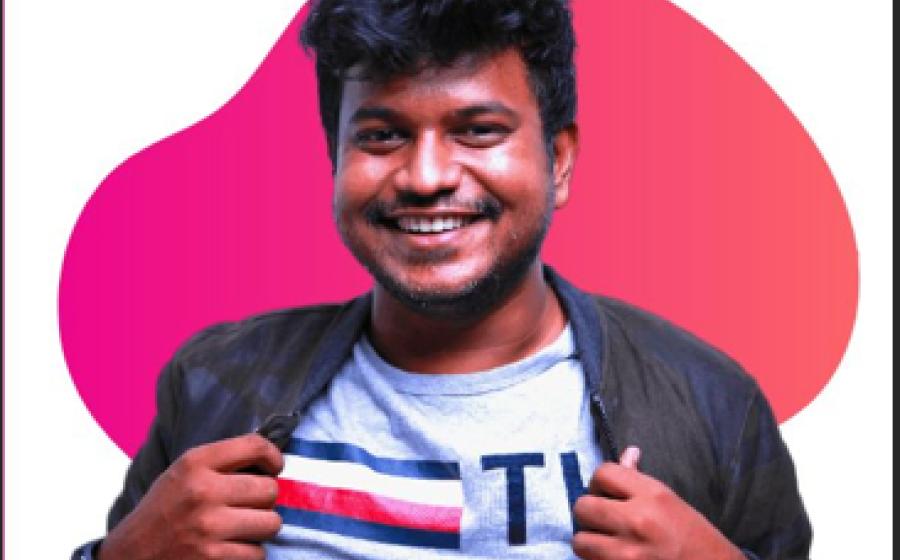
Name: Tanush Premkumar
Designation: Founder & CEO
Organization: Mushloop Private Limited
Questions
A: I am the Founder & CEO of Mushloop, a biomaterials innovation company developing fungal pigments, bio-based dyes, and sustainable packaging alternatives. My journey began with a deep interest in microbiology and material science, which later evolved into developing circular solutions using fungi. Today, I lead a multidisciplinary team working on mycelium-based packaging, bio-pigments, and low-carbon material innovations that aim to replace petrochemical-heavy processes in packaging and textiles. My role involves shaping the technology roadmap, guiding R&D, working with industry partners, and ensuring that our solutions move from the lab to commercial impact.
My motivation came from observing the massive dependency on plastic-based materials and the environmental burden they create. I saw an opportunity to use fungi as a scalable, clean, regenerative manufacturing system. The idea that biology can grow materials, grow pigments, and grow packaging with almost no waste continues to inspire me. What motivates me most is the balance between science and impact, and the ability to build technologies that reduce carbon emissions, empower local ecosystems, and create new industries around biofabrication.
Material innovation with low-carbon alternatives, digital integration across design and production, speed and flexibility, cost efficiency, and transparency in sustainability metrics and supply chains.
Adopting sustainable materials without losing performance, navigating regulatory and certification complexity, managing cost fluctuations and supply chain disruptions, and achieving recyclability or biodegradability goals at scale.
AI-driven packaging optimization, automation in converting and logistics, smart packaging with sensing capabilities, sustainable biomaterials such as mycelium and fungal pigments, and digital twins for supply chain simulation.
Technologically: AI and automation embedded into every stage, expansion of biofabricated materials, and advanced digital printing enabling hyper-personalization.
Environmentally: Mandatory sustainability disclosures, wide adoption of compostable, recyclable, and low-carbon materials.
Socially: Consumers increasingly demanding ethical, eco-conscious packaging, and the rise of micro-factories and localized production.
Introduce AI-curated topic hubs, feature emerging startups more prominently, include interactive case studies and material calculators, and expand global community discussions around circular packaging.
AI will create optimized packaging geometries, predict defects and machine behavior, automate planning to reduce waste, and enhance forecasting and inventory control across the supply chain.
Data-driven packaging with IoT or smart sensors can track product freshness, provide real-time supply chain visibility, enable anti-counterfeiting, and support personalized consumer interactions through QR or NFC technologies. This strengthens both operational reliability and consumer trust.
Automation will improve consistency and speed, reduce repetitive manual labor, allow flexible small-batch production, and enhance safety in warehousing and logistics. Robotics will become essential for precision and scale in packaging operations.
Mushloop uses fungi to grow materials from agricultural waste, develops biodegradable and non-toxic packaging materials and pigments, designs processes that require minimal water and energy, and builds localized production models to reduce transportation emissions. All our innovations follow regenerative design principles.
Packaging will increasingly function as a direct engagement tool through personalized digital printing, reflect brand commitments to sustainability, and create immersive consumer experiences using AR or QR-enabled content.
Collaborations between AI and material science, biotech and packaging, e-commerce and logistics, and printing technology with IoT systems. The most significant breakthroughs will emerge from the convergence of these fields.
Build deep expertise while staying multidisciplinary, start small and measure impact rigorously, adopt AI early, collaborate across sectors, and remain mission-focused because purpose drives resilience and innovation.
I have been inspired by leaders who combine scientific depth with a strong purpose. Individuals working at the intersection of sustainability and deep tech have shaped my thinking by demonstrating how research can translate into meaningful real-world impact.
My mornings begin with planning and reflection, followed by reviewing high-priority tasks and a short deep-work session before operational activities start. This helps maintain focus and clarity throughout the day.
Prioritize clarity by identifying the three most important tasks each day. Protect deep-work time through uninterrupted focus blocks. Iterate quickly, valuing progress over perfection. Stay data-driven by tracking decisions and experiments.
I am motivated by the belief that biology can solve some of humanity’s hardest problems. We are still at the beginning of this bio-revolution, and that possibility fuels my work every day. My mantra: “Build what the future needs, not what the present demands.”