




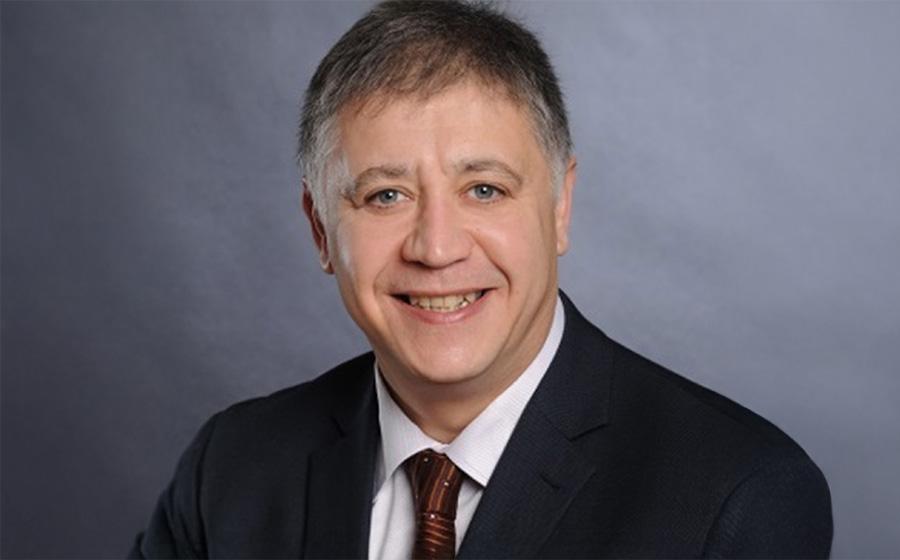
Name: Tamas Öri
Designation: Sales Manager, Global Agent Relations
Organization: Röchling Medical SE
Questions
My career can be clearly split into two distinct phases: until my early forties I was in product management and senior marketing roles in the business-to-consumer (B2C) economy, serving global multinational FMCG companies like Nestlé or Philip Morris. I ended that stage of my professional life as Marketing Director of a pharmaceutical company in Hungary. When I moved from my home country Hungary to Germany and changed to the pharma packaging industry, it was also a move to Sales function in a B2B environment. I had to learn the industry, the technical background and the complex ecosystem between Pharma and the Packaging industry. Currently I serve as a senior manager, responsible for all sales activities of Röchling Medical related to commercial agents, worldwide.
I do not want to say platitudes, but it is clearly geopolitical uncertainties. In concrete terms, in our industry innovation projects take several years, and decisionmakers cannot see, how the world will look like even at the end of this year. Therefore, our customers try to hold on, or delay planned projects to reduce investment risk, and as a result we receive fewer inquiries. The industry can respond to this challenge by offering solutions which decrease complexity and risk and can be implemented quicker.
The Röchling Group has a long history spanning over more, than 200 years, and during this period the world witnessed several crises including two world wars. Röchling always adopted to the social-political-economic and technological environment and helped its customers to make their goals possible during all these years. Our corporate identity is summarized in the self-identification statement “Possibilists – since 1822”. I am convinced, whatever the future brings, Röchling will be around to enable our customers to reach their objectives.
People in similar sales roles in our industry come either with a qualification in engineering or have a commercial background. I belong to the second group of professionals. Accordingly, what most excites me are topics of commercial nature. Is the commercial agent model suitable to expand our presence to the fastest emerging and highest potential geographic regions of the world, like India and the Gulf-countries? Are we able to depict in our operations the structural, economic and social differences between the emerging markets, Europe, our home market, and the USA? Are we flexible enough to adjust our product and service offers and processes accordingly? My personal goal and assignment are to find answers to these questions.
Is there an unmeet need, which the project can fulfill at reasonable risks and costs, both on customer and producer side?
Do we have a tangible competitive advantage in this project compared to our competitors, on which we can base the assumption of successful outcome of the project?
Did we cross-check the resilience of the project against possible hurdles, do we have an answer not only for the best case, but also for the worst-case scenario?
From the many possible approaches to answering this question I would like to choose a product-portfolio focused approach. If you think about the BCG-matrix of market attractiveness/ and market share dimensions (question marks, stars, cash cows, dogs), you should have a balanced product portfolio (unless you are a mono-product niche supplier). Your question marks after market launch today are the stars of tomorrow, and the cash cows of the day after tomorrow. You should also make the appropriate decision about your dog products – do they still have some aspect of attractiveness along which you can relaunch or reposition them or discontinue their production. This is an ever-changing dynamic map, and you are the master of balance. All the technological and competition factors are external forces resulting in changes in the status quo. I admit, keeping this balance is a very challenging part of my job together with my strategic marketing and product management colleagues, where I represent the market view.
Probably the biggest challenge is to find a fitting, reliable partner to achieve your objectives. To name a few criteria for consideration: assessment of financial stability and resilience; available technical, technological resources of the supplier; the core competences of the supplier; compliance with regulations; organizational, cultural and process-fit; innovation, regulatory and service resources, etc. Probably this is the most important criterium – the right choice of your packaging solution partner – which decides about success or failure of a packaging solution project. Sometimes it makes me sad how often the supplier selection is handled at a junior level position, basing the decision on the answers to a few questions. Do you have this product available as standard? How much does it cost? What is your lead time? What is your minimum order quantity? Röchling Medical can deliver valuable support to customers and brand owners already at the initial phase of a project – if we receive enough attention, information and opportunity to present our view of how to address a packaging solution challenge.
I cannot give a firm answer to this question. I agree that the trends and innovations you mentioned are in the focal point of conferences, trade fairs, summits and generally of the professional debate. But they have been there for a few years already, and none of these have transformed the industry landscape substantially until now. I always hear, that “we are still at the starting phase”. When it comes to implementation, producers prefer proven, low-risk solutions over innovative, but not yet established concepts. The good old white, round, HDPE tablet jar or the blister foils make still most of the currently used mainstream packaging, and they will stay with us for many more years. The only exception I saw is the almost explosive growth of autoinjectors – thanks to the GLP-1 revolution.
I would like to focus on one aspect, which is the rise of human-factor design. Until recently, the core, primary functions of packaging (protect, store and transport pharmaceuticals) almost entirely defined the ultimate form of packaging. Human factors, like enabling patient compliance, ease of use, ergonomics, child- and senior-friendliness have an ever-increasing role in packaging design, not to speak about the transition of some medication treatments from the caregiver-controlled hospital environment to self-administration. This trend will continue and will be even more characteristic, Röchling Medical has several initiatives in these fields.
No, not at this stage.
I must admit that I have limited knowledge and only my own opinion about the role of AI. What comes to my mind is that it will be much quicker and easier visually demonstrating different realization options in the design phase, modelling component designs and visualizing material options and material behavior. Generating written summaries, comparisons and descriptions of technological processes are examples of usage areas where I already use AI, although I am not a first mover in the application of new technologies.
In fact, there are several use cases for data driven packaging. Röchling Medical for example has an initiative called “Digital Technology Adoption”. In this focus area we analyzed the adoption of different technologies together with our standard packaging items, like RFID/NFC, Laser Marking, Magic Ink, In-Cavity Marking and SmartMarker®. With the adoption of these technologies we can create added-value solutions and upgrade commodity packaging to intelligent packaging with integrated features, where the customer doesn’t need to add additional equipment into their own manufacturing setup. The list of use cases is very long: quality assurance, inventory management, or lifecycle documentation. It supports traceability, serialization, process automation, and protection against product piracy. I would like to highlight the patented SmartMarker® technology of Röchling, where micro‑scale fluorescent particles are added to the plastic material at very low concentrations, which generate a unique, tamper‑resistant 3D fingerprint pattern that is permanently anchored within the material – it enables the creation of a digital ID (e.g., a Digital Product Passport).
3 terms: efficiency, high output at consistently high quality and minimizing risk of human errors. Let me describe a concrete case from our own praxis. The challenge was to ensure high-volume production and assembly of three parts produced with ultra-fast cycle times, while maintaining quality workmanship and keeping part prices low. We chose the solution of a fully robotized assembly system, serving on-line the high-output injection-molding machine. The ultra-fast assembly takes place in less than three seconds and allows for very low cycle times, so we could easily handle production in the double-digit millions. The automatic assembly machine can operate in three shifts, with production running for up to six hours without manual intervention. As a result, we managed to build a highly precise and self-sufficient production line with minimizing human involvement and with 100% automated quality control. The original objectives have been reached to the fullest satisfaction of our customer.
We have a lot of initiatives and concrete achievements. As first I would like to mention the Röchling BioBoom® and Röchling ReLoop® materials. Röchling BioBoom is a bioplastic material, which includes bio-based materials and mass-balanced bioplastics, while Röchling ReLoop® is a high-quality recyclate which is available as a post-consumer recycling product and post-industrial recycling product. But I can mention examples from our production as well: energy-efficient cold storage system and sustainable energy storage in Neuhaus; at the German sites, process-related waste heat is recovered through heat recovery systems and utilized to supply energy to administrative buildings and adjacent facilities; we are part of the Zero Pellet Loss Initiative; as far as possible, we recycle plastic residues in a closed loop; production waste that cannot be used for our own products is, where possible, supplied to our Industrial division for reuse or otherwise fed into the recycling loop. We are part of the joint project KARE, initiated by the Federal Ministry of Germany for Education and Research. This is a cooperation of 11 companies & 5 research and educational institutions to promote Design for Sustainability, for monitoring, reporting and marketing of CE- and sustainability activities, minimizing waste and avoiding granulate loss. Our German sites Neuhaus and Brensbach are ISCC Plus certified. As part of an ISCC PLUS certified supply chain, Röchling Medical's customers can actively contribute to promoting sustainability and conserving resources. I could continue…
As a former FMCG marketing person, this question is particularly interesting for me. Let me give you only 3 examples here. 1.) Technological innovations, like 2K injection molding, the simultaneous use of rigid and elastomeric plastics can result in very exciting material structures, which can be a signature for a brand. 2.) The creative use of materials and colors (of course pharma-grade, USP and EuPh-compliant materials and colors) can open the way to limited edition, collector packaging items, which is not an established practice in OTC pharma and nutraceuticals, but we can cite examples from the cosmetic and food industry. 3.) As a third example I can mention our Patient Centric Design program of our own in-house design team, which resulted in a series of senior friendly easy-to-grab closures with enhanced ergonomics and application of lower opening force. I have many more ideas, but I do not want to disclose all of them…
This is a way too complex question for anybody who has less knowledge than an industry analyst. Since I am not an industry analyst, only a simple salesperson, I rely on my own experience and pick one topic, material science. We are in the exceptional situation of having a whole division within the Röchling Group focusing on material science, our “older brother”, the Industrial Division of Röchling. Since Röchling Industrial serves ca. 30 industries from Aerospace over Agriculture, Drinking and Wastewater Technology, Oil and Gas, Renewable Energy to Nuclear Industry and Defense, they have the broadest knowledge about engineering plastics. For example, the previously mentioned SmartMarker® technology is also their invention. They have a Technology Center which is focused only on applied material science research. Not many pharma packaging manufacturers can tell that they have an advanced material research organization “in the family”, practically in-house. This is clearly a competitive advantage for us, and we rely more and more on material science partnerships with Röchling Industrial.
If I had a brilliant startup idea, probably I would try to find the right partners and realize that idea in my own start-up myself. Joke aside, young people have way more fantasy, innovation power and courage to bring up new ideas. Experienced professionals, like I can advise, encourage and mentor them, but the spark should come from the young generation.
I can mention here two honorable people from my FMCG-past, and another two from my recent pharma packaging carrier. FMCG:
Mr. Paul Garrison (USA), writer, columnist and experienced marketing practitioner and professor on marketing and brand strategy, former Coca-Cola “brand spin-doctor” – he truly raised me during my FMCG marketing career (https://www.linkedin.com/in/paul-garrison-9527881/)
Mr. Imre Sivo (HUN), retired, former General Manager of several renowned FMCG companies in Hungary, with one of the most impressive networks spanning from industry and financial decision makers over media people, politicians and cultural icons in Hungary, my ex direct manager, now friend (https://www.linkedin.com/in/imre-siv%C3%B3-7315339/
And from my pharma packaging carrier:
Mr. Sven Lang (GER), Vice President at VP Medical Packaging, who opened the door to the pharma packaging and hired me in Germany, and taught me the industry landscape at Sanner (https://www.linkedin.com/in/sven-lang-441b9190/)
Finally, my current CEO at Röchling Medical:
Mr. Daniel Werner Bühler (SUI), CEO & Member Board of Directors at Röchling Medical, who gives me the opportunity of accompanying him and the company in this very exciting journey to establish Röchling as a truly international player in the pharma packaging industry (https://www.linkedin.com/in/daniel-werner-buehler-53b6207/)
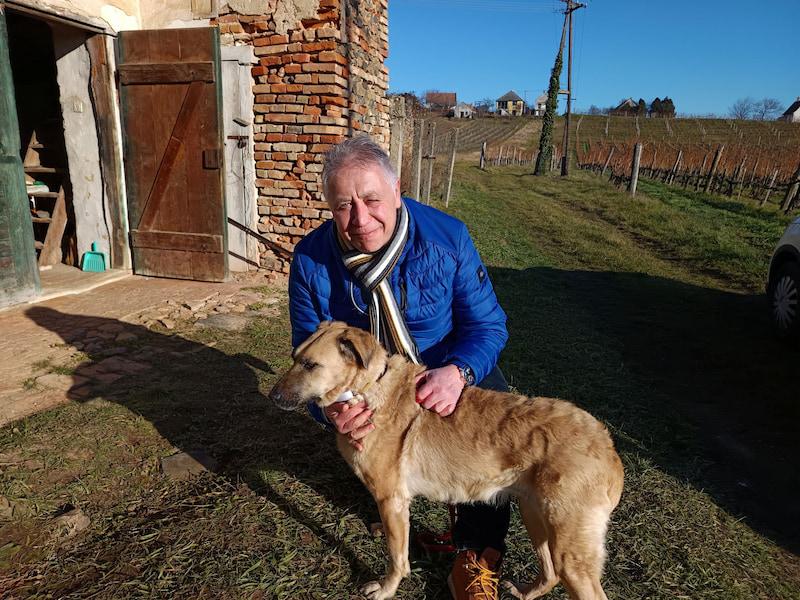
Not very exciting – morning coffee, short walk with my dog in the neighboring vineyards, working in my home office, coffee, coffee, coffee, more work, then afternoon walk with the dog. Highlight of the day is the dinner with my wife, with whom we have been happily married for 33 years.
I am not very good at consistently following principles.
I truly appreciate that I can live a very intensive international professional life, with a lot of travelling, with a lot of thinking and ideation, with knowing people from several continents and countries. I could not mention a job which would offer me more personal joy and satisfaction. Even in difficult times I enjoy my job, because I am a born optimist.
“It gets better. It always gets better. Whatever happens, it belongs to my life, and therefore valuable experience, because life itself is the most precious thing, and my ultimate, one and only, indispensable experience. From birth to death, the best personal movie ever seen.”