





As the medical device industry seeks safer and more sustainable sterilization methods, chlorine dioxide (ClO₂) is rapidly gaining attention as a viable alternative to ethylene oxide (EO). Growing regulatory scrutiny surrounding EO emissions and increasing environmental and occupational health concerns are accelerating the industry's search for effective low-temperature sterilization technologies.
According to recent guidance from the Association for the Advancement of Medical Instrumentation (AAMI), chlorine dioxide offers several advantages for sterilizing heat-sensitive medical devices. Unlike EO, chlorine dioxide is non-carcinogenic, non-flammable, and operates at ambient temperatures, making it well suited for complex devices containing electronics, batteries, and intricate lumens while reducing safety and environmental risks.
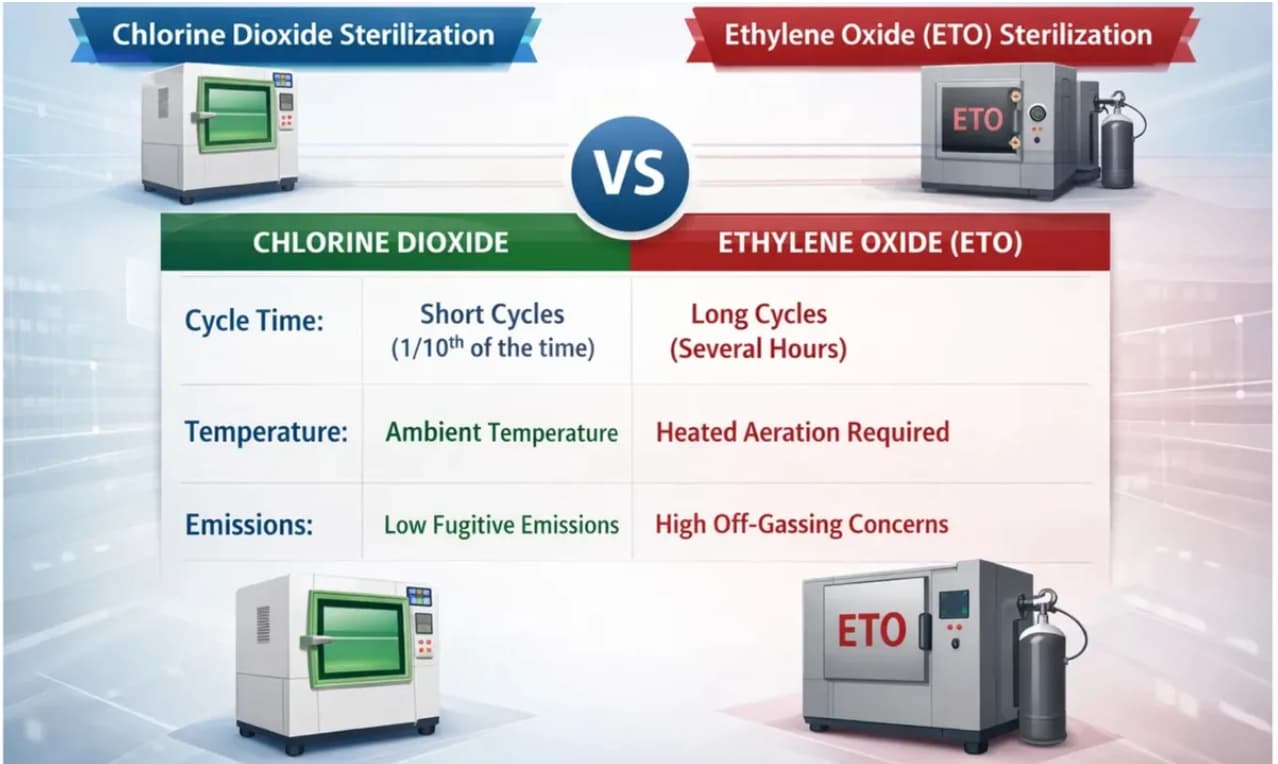
Industry experts also highlight significant operational benefits. Chlorine dioxide sterilization cycles can be completed in a fraction of the time required for EO, with sterilization and aeration occurring within a single chamber. The technology demonstrates strong compatibility with a wide range of medical devices and commonly used sterile packaging materials, including Tyvek®, medical-grade papers, polyester, and nylon-based films, without compromising package integrity.
While radiation remains the most widely adopted EO alternative, chlorine dioxide is increasingly being recognized as an important addition to the industry's sterilization toolkit. As regulatory bodies encourage diversification of sterilization modalities, continued validation studies and broader commercial adoption are expected to accelerate its role in future medical device manufacturing.