




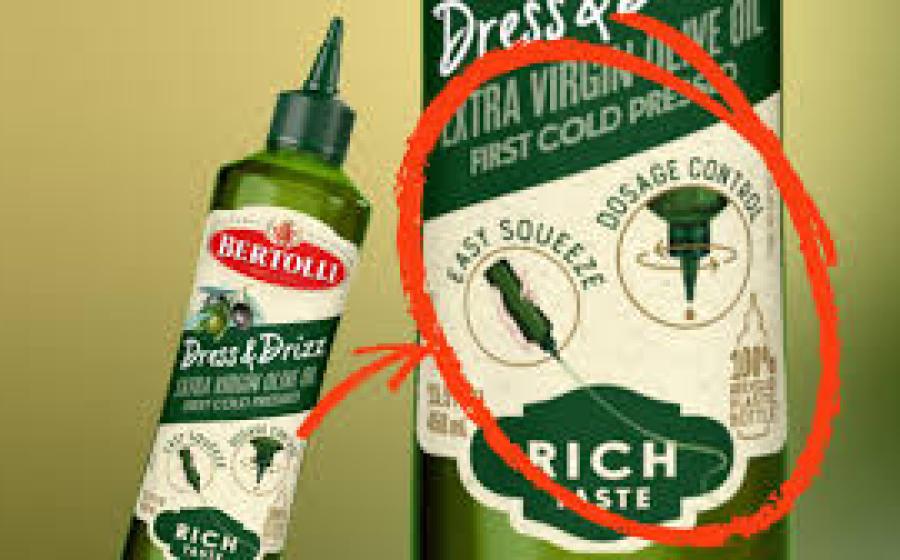

As squeeze bottles continue to gain traction in the olive oil aisle, Bertolli is pairing format innovation with a material shift: the Dress & Drizz extra-virgin olive oil bottle is made from 100% recycled PET (rPET), marking another step in the brand’s broader sustainability strategy.
According to a Bertolli spokesperson, the rPET used for Dress & Drizz is sourced through tightly controlled channels—the company didn’t disclose suppliers. “The rPET used for Dress & Drizz is sourced exclusively from EU-authorized facilities. We partner with a trusted supplier who holds a favorable scientific opinion and oversees the entire bottle-blowing process using recycled PET,” says a Bertolli spokesperson.
From a performance standpoint, the company says the move to rPET did not compromise functionality. “Functionally, rPET performs very similarly to virgin PET in core properties such as mechanical strength, clarity, and barrier performance,” the spokesperson says. While slight variations can occur depending on feedstock quality and recycling processes, the spokesperson notes that suppliers carefully select high-quality rPET flakes and optimize preform and blowing parameters to ensure final bottle performance remains aligned with virgin PET standards.
On the manufacturing floor, the transition required minimal disruption. “No new equipment was needed. Our existing lines were already compatible with the switch to rPET,” the spokesperson says. That includes filling, capping, labeling, and case packing operations.
The Dress & Drizz package itself represents a clean-sheet design rather than a retrofit. “The shape was developed specifically for this launch. We wanted to deliver a clear upgrade versus what was already available on shelf in this format,” says the spokesperson. The new silhouette, which features textured sidewalls and a controlled-flow nozzle, did require new tooling. “Yes, the new silhouette required a new mold,” they add.
Consumer usability was validated through testing before launch. “We conducted consumer testing to ensure the design addressed real usage needs, confirming improvements in grip, control, and dosing precision,” he says.
On the shelf, sustainability messaging is made explicit. “We communicate the 100% rPET claim clearly on the front label, and we reinforce it through marketing campaigns, our website, and ecommerce assets,” says a Bertolli spokesperson. To support proper end-of-life handling, Bertolli also aims to guide consumers through clear labeling. “Our labeling clearly indicates which components are made from recycled materials and specifies any parts that are not, helping consumers recycle each component correctly,” the spokesperson says.
The bottle itself is designed to remain within existing recycling streams. “rPET (recycled PET) bottles are widely accepted within today’s U.S. municipal recycling systems, particularly in applications such as beverage bottles, food bottles (sauces, dressings, oils, etc.), and clear plastic containers,” says a Bertolli spokesperson. The company acknowledges, however, that acceptance can vary locally depending on residue concerns and program-specific rules. Recycling acceptance can vary by municipality due to factors such as oil residue remaining in bottles, differences in caps-on vs. caps-off requirements, and whether recycling rules are set at the city or county level rather than statewide, according to the spokesperson.