





At a Glance
- Automated systems successfully sort 45% of rigid hospital plastics into recyclable material streams.
- Contamination risks from blood and drug residues complicate healthcare plastic recycling efforts.
- Multi-material films compromise recycling stream purity and reduce commercial value significantly.
The Healthcare Plastics Recycling Council (HPRC) – Europe has released a new case study titled Unlocking Recycling Potential: Automated Sorting Trials of Medical Plastic Waste, research building upon the findings of a previous pilot conducted in the Netherlands, which demonstrated the technical feasibility of manually sorting healthcare plastic packaging waste.
The second-phase study, conducted in Germany, tested automated sorting technologies under real-world conditions to evaluate their scalability and efficiency.
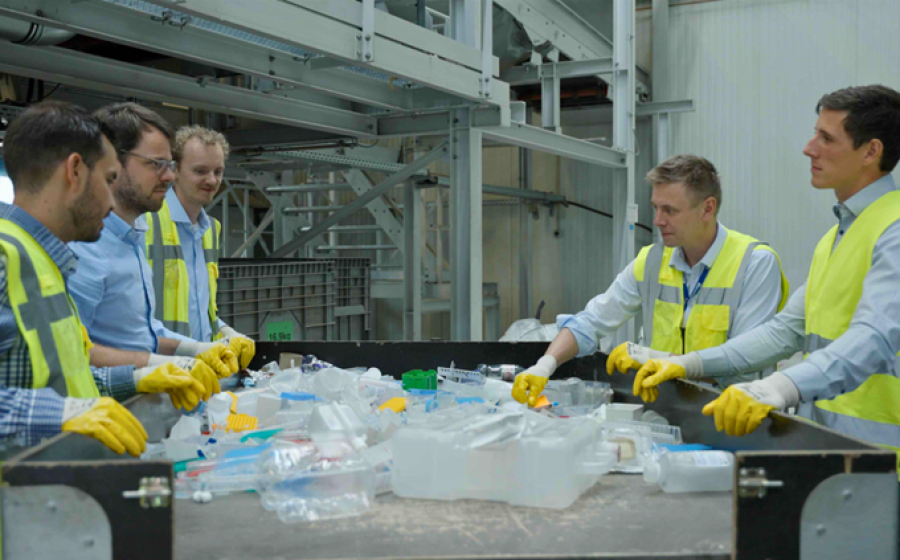
The study, carried out in collaboration with Universitätsklinikum Bonn (UKB) and Tomra, assessed whether industrial-scale systems could reliably sort healthcare plastic packaging waste with the accuracy, efficiency, and throughput required for sustainable recycling. The findings revealed that clean, well-segregated packaging can be efficiently sorted, but contamination risks remain a significant challenge.
Automated sorting systems recovered 45% of rigid plastics into polypropylene (PP), polyethylene (PE), and polyethylene terephthalate (PET) streams. Flexible packaging was sorted into PE, though multi-material films posed contamination risks. The study also highlighted that point-of-use sorting, AI-based object recognition, and trained staff could enhance outcomes when supported by proper hospital systems.
Additionally, following HPRC's Design Guidance was shown to improve sorting efficiency and waste value, creating potential revenue streams for hospitals.
Challenges in healthcare plastic recycling
Healthcare facilities generate large amounts of plastic packaging waste, which presents a recycling challenge due to contamination risks, material properties, and regulatory requirements. The study noted that effective collection and sorting of this waste stream have the potential to divert high-value resources from landfills and incineration, reducing environmental impacts, conserving virgin resources, and supporting healthcare systems in meeting sustainability and circular economy goals.
However, HPRC noted that contamination remains a critical barrier to efficient recycling. Items such as pharmaceutical residues, blood-stained packaging, and food waste must be removed at the source to enable safe processing. Manual inspection and removal of contaminants were necessary during the trial, highlighting the need for improved waste segregation strategies.
The study underscores the importance of collaboration across the value chain to scale solutions. By bridging the gap between theoretical feasibility and practical implementation, the findings provide evidence-based best practices for collection, logistics, and processing. The initiative was coordinated by HPRC with support from Circularmed, UKB, Tomra, and HPRC members DuPont, LyondellBasell, Baxter, and Nelipak.
HPRC noted that each partner brought complementary expertise to the project. UKB provided real-world materials for testing, while Tomra hosted the trials at its advanced sorting facility in Mülheim-Kärlich, Germany. CircularMed facilitated access to hospital waste streams and sorting facilities, and HPRC members supported the process during the pilot day.
Key findings and future directions
At Universitätsklinikum Bonn, plastic packaging waste is routinely collected from 14 locations across the hospital campus three times per week. For this study, specific waste collection points were selected to capture flexible and rigid healthcare plastic packaging. In total, 76 kilograms of non-hazardous plastic packaging waste was gathered in August 2024. The HPRC noted the batch was collected in big bags without compaction to reflect real-world conditions.
The Tomra Test Center utilized a ballistic separator to divide the waste batch into flexible and rigid material fractions. Optical sorting technologies then separated PE, HDPE, PP, and PET streams. The HPRC noted the sorting process involved ballistic separation to divide flexible materials from rigid ones using oscillating decks, followed by optical sorting with near-infrared and visible light sensors to detect polymers and other materials. Compressed-air jets separated target items based on detection.
The results showed that rigid plastics could be effectively sorted through a six-step optical sorting process, which maximized material purity while minimizing sorting steps. However, challenges such as size variability and the round shape of bottles affected detection accuracy. According to the study, flexible materials were sorted using Tomra's Autosort Speedair system, targeting PE flexibles. According to the study, this process resulted in 10.5 kilograms of PE flexibles, representing 20% of the flexible fraction. Sorting flexible fractions economically at scale requires dedicated equipment to increase throughput due to their larger surface area.
What was learned
The waste collected during the study was successfully sorted into flexible and rigid formats, which were then further separated into specific material waste streams. This process utilized sorting equipment similar to that found in commercial consumer waste management facilities, demonstrating the potential for scaling healthcare plastic recycling to industrial levels. By employing advanced sorting technologies, the study highlighted the feasibility of processing healthcare packaging waste with precision and efficiency.
Unlike typical commercial conditions where waste is compacted and screened by size before sorting, this study used a targeted healthcare packaging waste stream that was fed directly into the sorting process. Compaction and size screening, as commonly practiced in commercial settings, could enhance sorting effectiveness by enabling more efficient handling of rigid compacted items. These additional steps may improve throughput and material purity, making the recycling process more viable on a larger scale.
However, the study noted that contamination risks in hospital waste streams remain a significant challenge. The presence of blood, needles, or drug residues can render waste hazardous, complicating recycling efforts. While methods for reprocessing contaminated hospital waste are being developed, they are costly and require specialized facilities.
To mitigate these risks, HPRC added that hospitals must ensure that packaging waste streams remain non-hazardous through proper segregation, comprehensive staff training, and strict adherence to established waste-sorting protocols. These measures are essential for maintaining the integrity of recyclable materials and supporting sustainable waste management practices.
The study successfully separated 45% of rigid materials into polypropylene (PP), polyethylene (PE), and polyethylene terephthalate (PET) recycling streams, demonstrating the potential for recovering valuable resources from healthcare plastic waste. However, 55% of the rigid materials were rejected and would likely be sent for incineration. Researchers noted that with proper industrial pretreatment, such as compaction or size screening, the recovery rate for rigid plastics could be significantly improved, enhancing the overall efficiency of the recycling process.
In the flexible plastics stream, the sorting process directed a variety of medical device packaging into the PE recycling stream. Upon closer examination, it was found that this PE fraction included multi-material films, which pose a risk to the quality of the recycling stream. According to the study, these mixed-material films can compromise the purity of the recovered PE, creating challenges for downstream recycling operations and reducing the value of the recycled material.
Packaging and medical devices made from multiple materials present a significant obstacle to effective sorting and segregation. Ideally, these mixed-material components should be excluded during the sorting process to prevent contamination. However, the study noted there remains a substantial risk that such materials enter recycling streams, particularly in mechanical recycling systems. This contamination diminishes the commercial value of the recovered plastics, making them less appealing to waste management companies and complicating efforts to establish a sustainable recycling infrastructure for healthcare plastics.
Effective sorting demonstrated
This study has demonstrated that healthcare packaging materials collected within hospital environments can be effectively sorted using commercial waste handling processes, providing a promising proof of principle for scaling recycling efforts. However, significant challenges remain, particularly regarding contamination risks and the complexities posed by multi-component and multi-material packaging and devices.
To address these issues, the HPRC noted that medical devices and packaging should adhere to design-for-recycling principles to enhance sorting efficiency and material recovery. Additionally, implementing source-level sorting within hospitals, supported by comprehensive staff training, clear procedures, and active engagement, can further improve recycling outcomes and contribute to a more sustainable approach to managing healthcare plastic waste.
The HPRC is a private technical coalition comprising industry leaders from healthcare, recycling, and waste management sectors. Focused on improving the recyclability of plastic products in healthcare, HPRC works to enhance the economics, efficiency, and overall quality of healthcare plastics collected for recycling.
With a presence in both the United States and Europe, the organization collaborates with key stakeholders to drive innovation and identify opportunities for advancing sustainable solutions.