




Flexible packaging solution offers a potential alternative to rigid plastic containers, helping businesses reduce packaging material usage, improve logistics efficiency and simplify dispensing for suitable hazardous products.
Fenton Packaging Solutions and Quadpak have joined forces to expand the availability of UN-approved Bag-in-Box (BiB) packaging for detergents, professional cleaning products, hygiene solutions and suitable chemical applications across the UK, Ireland and the United Arab Emirates (UAE).
Announced on 6 October 2026, the collaboration combines Quadpak’s expertise in flexible liquid packaging with Fenton’s market knowledge and customer relationships to help businesses identify alternatives to conventional rigid plastic containers.
The solutions are intended for compatible products classified under Packing Groups II and III, subject to product compatibility, packaging specifications and applicable transport regulations.
UN-Approved Bag-in-Box as an Alternative to Rigid Packaging
Bag-in-Box packaging combines a flexible inner bag with an outer protective container, providing a lightweight format for storing and transporting liquid products. For suitable applications, the format can replace traditional rigid plastic jerry cans and other containers used in professional cleaning and chemical supply chains.
Quadpak manufactures a range of flexible liquid packaging solutions, including conventional Bag-in-Box systems, its Cheertainer™ design, stand-up pouches, pillow bags and customised formats.
The partnership aims to make these solutions more accessible to businesses seeking to improve packaging efficiency while maintaining the performance and compliance requirements associated with their products.
Chris Warren, Managing Partner at Fenton Packaging Solutions, highlighted the companies’ collaboration in developing UN-approved alternatives for appropriate products within Packing Groups II and III.
Reduced Plastic Usage and Improved Logistics Efficiency
One of the key advantages of Bag-in-Box packaging is its potential to reduce the amount of plastic used compared with conventional rigid containers. According to the companies, suitable solutions can use approximately 80–90% less plastic, depending on the application and packaging configuration.
The flexible format can also improve storage and transportation efficiency by reducing the space occupied by empty packaging and enabling more efficient use of transport capacity.
Key potential benefits include:
- Reduced packaging material: Flexible bags can require substantially less plastic than comparable rigid containers.
- Improved transport efficiency: Compact packaging can help optimise vehicle loading and warehouse storage.
- Lower waste volumes: Reduced material usage can decrease the amount of packaging requiring collection and disposal.
- Controlled dispensing: Compatible systems can incorporate dosing equipment to support accurate product delivery and minimise spillage.
- Potential cost savings: Lower packaging consumption and improved logistics efficiency may help reduce overall supply-chain costs.
The actual benefits depend on product requirements, package size, transport conditions, dispensing arrangements and end-of-life management.
Proquimia Demonstrates the Potential of Bag-in-Box
The commercial potential of this packaging format is illustrated by Proquimia, a Spain-based manufacturer of professional cleaning and disinfection products.
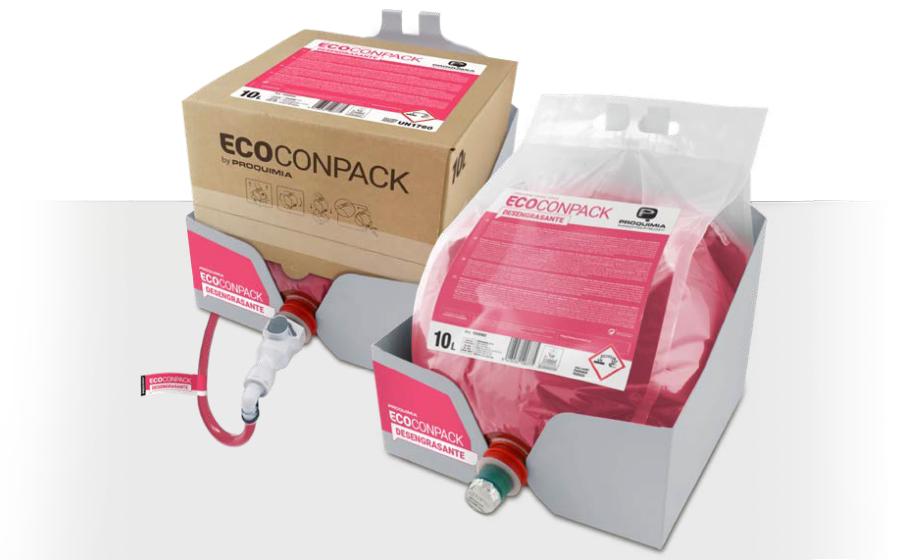
Proquimia has used Quadpak’s packaging through its Ecoconpack hygiene system since 2011. The system combines concentrated cleaning and disinfection products with dosing equipment for applications including kitchen hygiene, housekeeping, general cleaning and laundry.
According to the information supplied by the companies, Proquimia reports a 95% reduction in plastic waste and a 75% reduction in transport and storage costs through the system.
These results demonstrate how combining concentrated formulations, flexible packaging and efficient dispensing can contribute to improvements in professional cleaning operations. The reported savings relate to Proquimia’s specific system and should not be assumed to apply to every Bag-in-Box application.
Addressing Packaging Costs and Sustainability Requirements
Businesses using rigid plastic containers face increasing pressure to manage packaging costs, recycling obligations and waste disposal requirements. In the UK, Extended Producer Responsibility (EPR) and Plastic Packaging Tax (PPT), where applicable, are additional considerations for packaging procurement and material selection.
By reducing packaging material usage and improving logistical efficiency, Bag-in-Box solutions may offer businesses an opportunity to address some of these cost and sustainability challenges.
However, switching to flexible packaging requires a full assessment of product compatibility, barrier requirements, dispensing performance, recyclability and applicable regulations. For hazardous chemical applications, the specific packaging design must also meet the relevant UN performance requirements and transport regulations.
Strengthening Flexible Packaging Adoption
The collaboration brings together Quadpak’s manufacturing capabilities and experience in flexible liquid packaging with Fenton’s distribution network and customer relationships.
Quadpak Managing Director Stellan Flensmo said the partnership would help make the company's packaging solutions available to a wider customer base across the UK, Ireland and the UAE.
The initiative reflects a broader shift towards evaluating flexible packaging as an alternative to conventional rigid formats in industrial and professional applications, particularly where material reduction, transport efficiency and controlled dispensing are important considerations.