




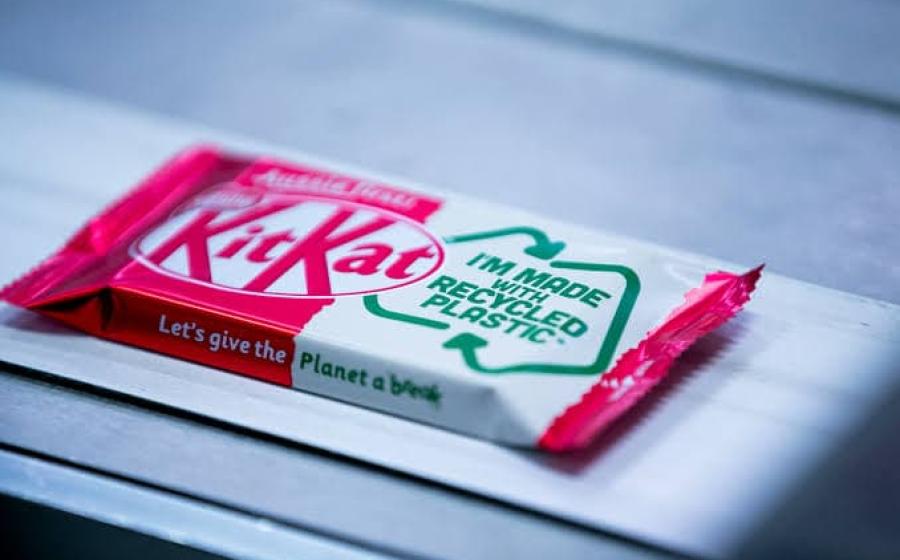

Nestlé Australia has collaborated with multiple companies to develop a prototype KitKat wrapper made with recycled soft plastic, demonstrating a potential pathway toward circular food packaging.
The project brought together Nestlé, CurbCycle, iQ Renew, Licella, Viva Energy Australia, LyondellBasell, REDcycle, Taghleef Industries and Amcor to address one of the major challenges associated with soft plastic packaging: collecting, processing and converting used packaging back into material suitable for new food packaging.
From Waste Soft Plastic to Food-Grade Packaging
The collaboration explored a closed-loop approach in which collected soft plastic waste was processed using advanced recycling technology. The waste was converted into oil feedstock, which was then used to produce recycled plastic for a food-grade KitKat wrapper prototype.
According to LyondellBasell, the prototype contained 30% recycled soft plastic, with the recycled content ultimately converted into polypropylene used for the wrapper.
Why This Matters for Flexible Packaging
Flexible packaging provides important benefits such as low material usage, lightweight construction and strong barrier performance. However, recycling soft plastic at scale remains challenging because of collection, sorting and processing limitations.
The KitKat project demonstrates how collaboration across the packaging value chain can help create a pathway for post-consumer soft plastics to become a resource rather than waste.
Nestlé said the initiative was aligned with its ambition to reduce its use of virgin plastics and increase the availability of food-grade recycled plastic packaging.
Key Packaging Takeaway
The project highlights an important principle for the future of flexible packaging:
Recyclable packaging design is only one part of the circular economy. Collection systems, advanced recycling technologies, recycled-resin production and end-market demand must work together to create a truly circular packaging system.
The KitKat wrapper prototype therefore represents more than a packaging material innovation—it demonstrates the importance of value-chain collaboration in developing recycled-content solutions for food packaging.