




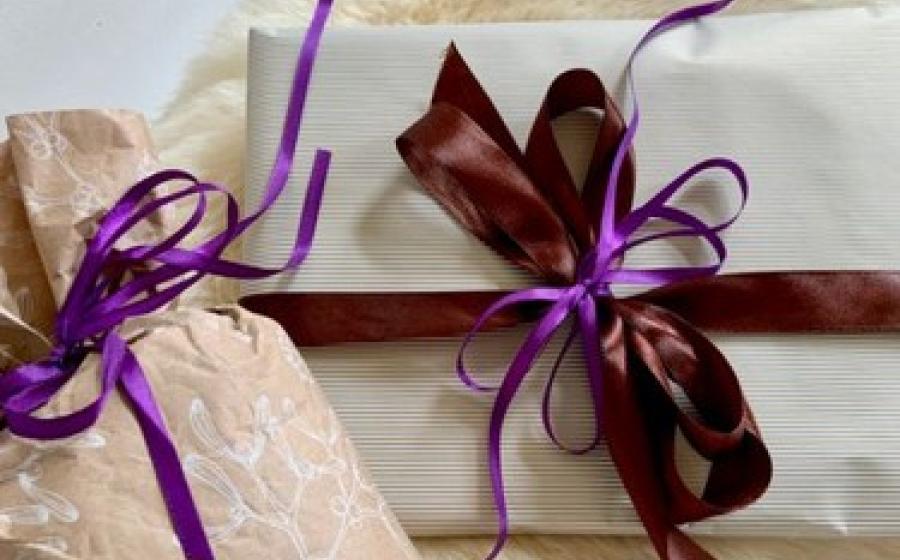

Gifts are rarely torn open straight away. The fingers find the ribbon first, and for a moment they just hold it, turning the bow over, deciding whether to pull the loose end or slide the whole thing off intact. Some people even save it afterwards, smoothing it flat and tucking it into a drawer for no reason they could explain.
That small hesitation says a lot about what a ribbon is really doing. On paper, its job is simple: keep the lid on. But nobody needs a satin bow for that. Tape would work.
The ribbon is there because a knot means something. We talk about ties between people, about being bound together, and a ribbon on a box turns that old idea into something you can hold. Someone sat down and tied it for you, and the knot is proof of that effort.
It also changes the pace of the moment. Pulling a bow loose is slow by design, and that pause lets anticipation build before the lid ever lifts. Even the most impatient person tends to slow down for a bow. The ribbon becomes part of the gift, a first small reveal before the main one. It is a tiny ritual, and rituals are what make a gift feel like more than an object.
Part of its pull is about worth, too. Ribbon has long been seen as a decorative extra, something added when an item deserves special treatment, and that association has never really faded. A plain box can feel ordinary, but add a ribbon and it suddenly feels considered. Brands know this well, which is why many treat ribbon color and finish as part of their identity.
Then there is the link with celebration. Ribbons turn up on medals, awards and ceremonial sashes, so a ribbon on a package borrows a little of that sense of occasion.
Red leans toward love, gold toward luxury, white toward weddings and green toward nature, and designers pick these shades on purpose.
Today the ribbon is changing again. Many brands are swapping plastic-based ribbon for paper, cotton and compostable options, hoping to keep the feeling while shrinking the footprint. The material may change, but the gesture stays put: a small, deliberate act of tying something closed so that another person can have the pleasure of undoing it.