




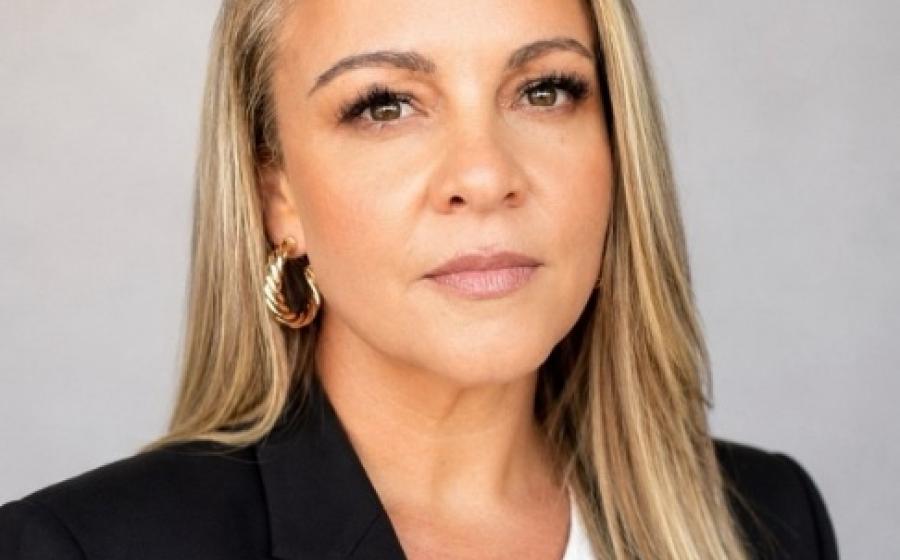
Name: Rhiannon Mauala
Designation: Founder
Organization: easyamends®
Questions
I’ve spent more than 30 years in print and packaging, and I learned the industry from the ground up. I started as a plate maker at 16, when the industry was still very hands-on. From there, I moved through prepress, step-and-repeat, finished art, retouching, packaging design, QA, colour management, packaging production, production management and team leadership.
Working across both design and production has allowed me to understand nearly every stage between an initial idea and a finished pack coming off the press. I understand the importance of creating packaging that looks right creatively, communicates clearly and can also be reproduced successfully in print.
I started my own business 12 years ago, working directly with major brands across packaging design, finished art and production while managing large volumes of packaging artwork. That gave me an even clearer understanding of the problems businesses experience around briefing, amendments, communication, approvals and version control.
Today, I’m the founder of easyamends®, a platform designed to simplify packaging artwork amendments and the workflow surrounding them. easyamends® didn’t come from looking at the industry from the outside. It came from spending my career designing packaging, producing artwork, managing workflows, leading teams and solving the problems that occur between an idea and the final printed pack.
One of the biggest challenges I face today is getting people to rethink processes they’ve used for years. The packaging industry is built around established relationships and familiar ways of working. Even when a process is slow, expensive or overly complicated, changing it can feel like a risk. With easyamends®, I’m not only introducing a new platform, I’m asking people to look at a familiar part of their workflow differently.
A packaging artwork change might physically take ten minutes, but once you add briefing, quoting, scheduling, emails, mark-ups, amending, checking, approvals and file delivery, that small change can take weeks. That doesn’t mean agencies, printers, studios or artwork providers are doing something wrong. They all have an important role in the industry. The problem is that traditional systems and workflows aren’t always designed to handle smaller, straightforward changes efficiently.
I believe the industry needs to evolve by simplifying those workflows and being more open to technology that removes unnecessary administration, improves version control and makes communication and approvals more transparent.
Technology shouldn’t replace packaging knowledge or human responsibility. It should make better use of that expertise by taking care of the repetitive steps and allowing experienced people to focus on the decisions that genuinely require them.
I don’t expect easyamends® to change the entire packaging industry, but I do hope it can change the way people think about certain parts of the process.
Packaging artwork shouldn’t disappear into a black hole of emails, attachments and mark-ups just because somebody needs to change a barcode, colour, ingredient or piece of copy.
I want easyamends® to show that packaging workflows can be simple, transparent and accessible without compromising quality.
Longer term, I’m particularly interested in how technology can help brands manage artwork history, approvals, QA and their latest approved files while still keeping experienced people at the centre of important decisions.
What excites me most is using my packaging experience to build practical solutions for problems I’ve encountered throughout my career.
AI is making it possible to create packaging concepts and imagery in seconds, but there is still a significant gap between creating something that looks like packaging and producing artwork that is technically correct and ready to print. I’m interested in finding better ways to bridge that gap.
I’m also excited by the potential for smarter artwork QA, automated comparison, preflight and compliance checking. Packaging artwork contains an enormous amount of detail, and even a small error can become very expensive once it reaches production. Technology that can identify potential problems earlier could save time, reduce risk and prevent waste.
The third area is creating more connected workflows. Briefing, artwork, communication, mark-ups, approvals, revision history and final files shouldn’t need to be spread across multiple systems and email chains. For me, these ideas are all connected. It’s about using technology to create a clearer path from concept to print while keeping experienced people responsible for the decisions that require real packaging knowledge.
That is where I see the next stage of my career: continuing to take the problems I know firsthand and building solutions that make the packaging process simpler, safer and more efficient.
Clarity, accuracy and printability.
Be clear about what needs to be achieved before you start. Make sure every detail is accurate, because even a small mistake in packaging can become a very expensive one once it reaches production.
And above all, it has to be printable. Something can look fantastic on screen, but if it can’t be reproduced successfully in the intended print process, it hasn’t done its job.
I also believe strongly in keeping things simple. Packaging is complex enough without adding unnecessary steps to the process.
For me, good packaging artwork isn’t just about how it looks, it has to work in the real world.
Technology is changing quickly, and businesses need to adapt, but adopting AI for the sake of saying you use AI isn’t enough. Customers still need people who understand packaging.
They need someone who understands why a file won’t print correctly, why a colour is behaving differently, why a barcode or dieline matters and what can go wrong once something reaches production.
I think the businesses that will do well are the ones that combine technology with genuine knowledge and make the experience easier for their customers.
Visibility is a big one.
Packaging involves a lot of people, marketing, regulatory, designers, artworkers, agencies, printers, prepress, suppliers and internal approvers.
The more people involved, the easier it becomes for information to get lost.
Which file is current? Has that change been made? Who approved it? Is everyone looking at the same version?
I’ve seen those questions throughout my career.
I think brands need more control and visibility over their artwork without needing to become packaging production experts themselves.
For me, AI is the most fascinating because of the speed at which it is changing what people can create. Someone with very little design experience can now produce an incredibly convincing packaging concept. That’s exciting, but it also creates another challenge.
A beautiful AI-generated image isn’t necessarily usable for printing. Fonts may not exist, images may not have enough resolution, elements may be impossible to reproduce and the concept doesn’t necessarily understand print specifications, colour separations, dielines or production limitations.
So I think AI is going to create enormous opportunity, but it’s also going to make production knowledge even more important.
I think we’re going to see much more automation throughout the packaging lifecycle. Some of the repetitive production and checking work we currently do manually will inevitably become automated.
Environmentally, there will obviously continue to be pressure to rethink materials and reduce packaging waste, but I also think we need to look at waste throughout the entire process.
An artwork error that results in packaging being reprinted is waste too.
Socially, I hope we see more sharing of knowledge across the industry.
Packaging has so many specialised areas, and sometimes we operate in our own little bubbles. There is a huge amount we can learn from each other.
I’d love to see even more real conversations from people working across different parts of the packaging process. Not just the finished success stories, but discussions about the problems we’re trying to solve, what hasn’t worked, what we’re learning and where we think things could be done better.
One of the things I’ve realised recently is how valuable our collective knowledge is. Designers, artworkers, prepress specialists, printers, converters, brands, material suppliers and technology providers all see packaging from different perspectives. Bringing those perspectives together is where platforms like PackagingConnections can be incredibly valuable.
AI is going to change packaging enormously, but I don’t believe it’s going to remove the need for expertise. It’s going to make concept creation faster and more accessible. It will automate repetitive tasks, analyse information, compare files and eventually identify many problems before a human ever sees them.
But AI creating a packaging concept doesn’t automatically mean that concept can be printed.
There is a whole world between “that looks great” and “that can go to print.” That’s where knowledge of prepress, finished art, colour, substrates, print processes, dielines, trapping, separations and regulatory requirements still matters.
I think the real opportunity is AI + human expertise, rather than one replacing the other.
I think data becomes really powerful when it connects information that currently lives in different places.
From an artwork perspective, imagine every product having a clear history, it’s current approved artwork, previous versions, approvals, changes and production information all connected to that product. That sounds simple, but even that could remove a huge amount of uncertainty. Then you can start connecting that information further into manufacturing, logistics and eventually consumer interaction.
For me, the value of data isn’t having more of it. It’s making the right information easier to find and actually useful.
A huge role, particularly with repetitive tasks. I’ve spent enough years in production to know how much unnecessary time can be wasted doing the same simple repetitive tasks repeatedly. If a machine can reliably do something that doesn’t require human judgement, let the machine do it.
That doesn’t make people less important. It gives people more time to solve problems, make decisions, communicate and use the knowledge they’ve spent years developing. I see automation as supporting people rather than replacing them.
easyamends® isn’t a packaging manufacturer or material supplier, so I won’t pretend we’re solving the material sustainability challenge.
Where we can contribute is through better workflows and fewer mistakes. Incorrect artwork, missed changes, wrong versions and unnecessary rework all have consequences. If an error reaches production and packaging needs to be reprinted, that’s unnecessary waste.
Better briefing, QA, approvals and version control can help reduce that risk.
Sustainability isn’t only about what packaging is made from. We should also be looking at how efficiently we create it.
Packaging is often the first thing someone sees when choosing a product, and it’s something they take home with them. That gives brands a chance to tell a story through the design itself.
In the future, I think we’ll see more packaging tailored to different people, places and occasions. A QR code can also take someone beyond the pack to learn about the product, the people behind it or how to use it. The important thing is that it feels relevant to the customer. The design should make the connection first, and any added technology should give them a reason to explore further.
I think some of the best innovation will come from people who normally wouldn’t sit at the same table. Technology developers understand what software can do. Printers and converters understand manufacturing. Artwork and prepress people understand what happens between a concept and production. Brands understand the consumer and commercial pressures. Material specialists understand what’s physically possible.
Put those people together early enough and you have a much better chance of creating technology and solutions that solve real problems rather than creating technology for technology’s sake.
Use AI. Experiment with it. Learn everything you can about it. It’s going to be part of your future, so don’t be afraid of it. But don’t let technology stop you from learning how things actually work.
Understand print. Understand colour. Understand materials. Understand why a dieline matters. Ask what happens to your artwork after you hand it over. And ask questions.
One question I’ve probably asked throughout my entire career is: “Why are we doing it this way?”
Sometimes there is a very good reason. And sometimes the answer is simply: “Because that’s how we’ve always done it.” That’s usually where there’s an opportunity to make something better.
There are two people who have had a real influence on my career.
The first is Mary Tapia, my first boss at Montage Visual Concepts when I entered the industry. Mary taught me the fundamentals, but more importantly, she gave me the space to learn, make mistakes and grow from them. That foundation has stayed with me throughout my career.
The second is Angela Orenstein, who I worked with later in my career. Ange saw something in me that I probably didn’t see in myself at the time. She encouraged me to back myself and ultimately inspired me to start my own business.
I’ve been fortunate to have two strong women influence me at very different stages of my career, one who helped me find my feet in the industry, and another who encouraged me to create my own path.
My mornings always start with coffee, research and setting goals for the day.
As a solo founder, I only have myself to rely on, so I need to be clear about what I want to achieve each day. I like to spend some time researching what’s happening in the industry, looking at new ideas and developments, and then working out where my attention is best spent.
I’ve learned that I don’t need to achieve everything in one day, but I do need to keep moving forward.
This is probably something I’m still learning! As a solo founder, there is always something else I could be doing. Another idea, another problem to solve, another improvement I could make. I’ve learnt that being busy isn’t necessarily the same as moving forward.
I try to work out what matters that day and focus on that rather than trying to solve everything at once.
I’m also a big believer in trying things. Not everything works out, and I’ve made plenty of mistakes along the way, but every mistake teaches you something. I’d rather try, learn and adapt than wait forever for everything to be perfect.
I’m motivated by solving problems and proving that things can be done differently. If I see something that isn’t working, my instinct is always to ask: “How can this be better?”
My personal philosophy is: “You’re never too insignificant to make a change.” I genuinely believe that.
You don’t need to be the biggest company, have the biggest budget or be the loudest voice in the room to make an impact. Sometimes change starts with one person questioning why something has always been done a certain way, seeing how you can improve it and being willing to do something about it.
That mindset has carried me through my career and ultimately led me to create easyamends®.