




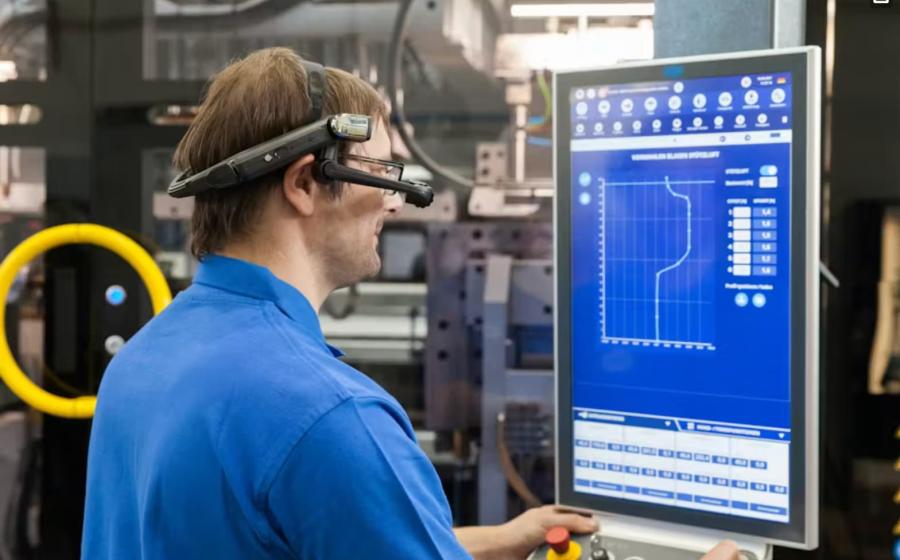

For decades, many plastics processing plants have followed a simple maintenance philosophy: run the machine until something breaks, then fix it. A new generation of connected equipment, sensors, analytics and artificial intelligence is now changing that approach, enabling manufacturers to identify potential failures before they result in costly downtime.
The shift from reactive maintenance to condition-based and predictive maintenance is emerging as an important innovation in plastics processing. Instead of relying solely on fixed maintenance schedules or responding after a failure, manufacturers can continuously monitor machine health and use real-time data to determine when intervention is actually required.
From scheduled maintenance to machine intelligence
Traditional preventive maintenance typically relies on calendar-based schedules—for example, replacing a component after a defined number of operating hours. While this can prevent some failures, it can also result in components being replaced before the end of their useful life.
Condition-based monitoring takes a more targeted approach. Sensors can track parameters such as vibration, temperature, pressure, oil condition, throughput and machine performance. When readings move outside established operating ranges, maintenance teams receive an early warning and can investigate the issue before a breakdown occurs.
Predictive maintenance goes a step further by using historical machine data, sensor trends and machine-learning models to estimate when a component or system is likely to fail. This allows maintenance to be scheduled during planned production stoppages rather than during unexpected breakdowns.
AI brings another layer of intelligence
Artificial intelligence is increasingly being integrated into these maintenance platforms. Rather than simply generating an alarm, AI-enabled systems can analyze machine behaviour, identify abnormal patterns, assist with root-cause analysis and recommend corrective actions.
For plastics processors, this can translate into lower unplanned downtime, faster troubleshooting and better equipment utilization. AI-based maintenance tools are also becoming particularly relevant as manufacturers face shortages of experienced maintenance personnel. Digital systems can help less-experienced technicians access machine history, diagnostics and recommended actions more quickly.
OEMs are building predictive capabilities into machinery
Leading plastics machinery manufacturers are already incorporating these technologies into their equipment and service platforms.
Milacron's M-Powered digital platform combines IIoT connectivity, software and AI-powered diagnostics to monitor machine operations and identify potential problems. The platform can also provide insights into overall equipment effectiveness and help identify root causes of downtime and production inefficiencies.
Engel's e-connect platform provides customers with centralized access to machine data, service history and spare-parts information, while its condition-monitoring capabilities track important performance indicators such as oil and pump condition. Remote maintenance and augmented-reality tools can further support faster troubleshooting.
Meanwhile, Conair has integrated maintenance scheduling and monitoring capabilities into its auxiliary equipment. Its DC-B Premium Control, for example, tracks operating hours and automatically generates maintenance alerts for components including filters, heaters and desiccant wheels.
Other manufacturers, including Bekum, Absolute Haitian, ACS Group and Wittmann, are also developing connected tools and service models that support more proactive equipment maintenance.
Why this matters for plastics processors
The business case extends beyond preventing machine breakdowns. Predictive maintenance can help manufacturers improve OEE, production planning, spare-parts management, machine life and maintenance efficiency.
It also enables maintenance teams to move from a reactive firefighting role to a more strategic function. Instead of asking “What has failed?”, the question becomes “What is showing signs of failure, and when should we intervene?”
As plastics machinery becomes increasingly connected and production environments become more automated, the ability to collect and interpret machine data is likely to become a core competitive advantage.
The future: maintenance as a digital capability
The next evolution is likely to move beyond simply predicting failures toward prescriptive maintenance, where systems can recommend the best intervention, identify the required spare parts and help technicians execute repairs.
For plastics processors, the transition is therefore not simply from reactive → preventive → predictive maintenance. It represents a broader shift toward data-driven equipment lifecycle management, where sensors, connectivity, AI and human expertise work together to maximize machine performance.
The message for manufacturers is increasingly clear: waiting for a machine to break is becoming one of the least efficient maintenance strategies available.